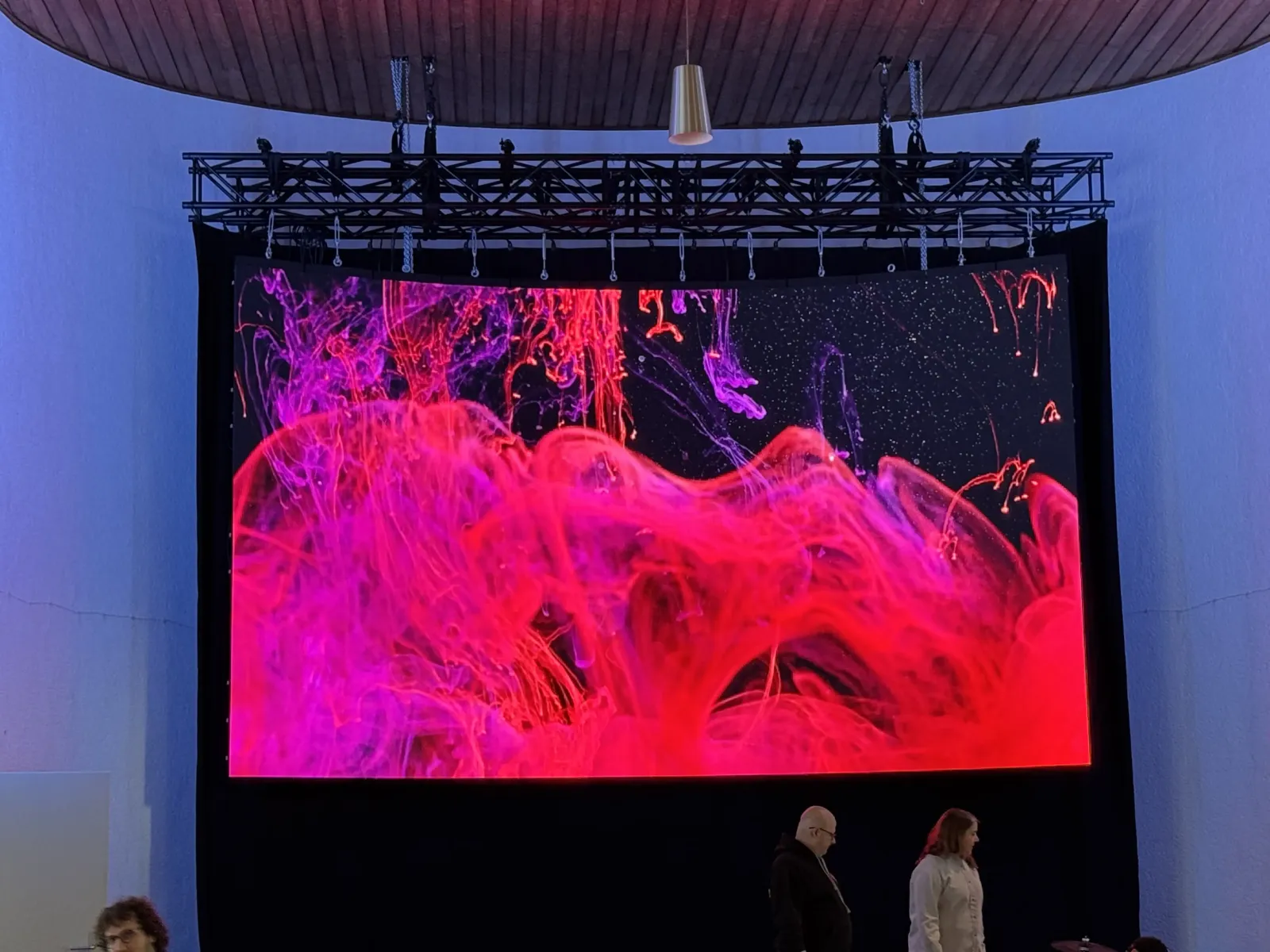
An LED wall is a large-format display system composed of individual LED modules that together create a seamless, high-brightness visual surface. Unlike traditional LCD screens that use backlighting, each pixel in an LED wall is self-luminous, meaning it produces its own light. This fundamental difference gives LED walls their characteristic superiority in brightness, contrast, and viewing angles.
The technology behind LED walls has evolved dramatically over the past decade. Modern LED walls use surface-mount device (SMD) LEDs that combine red, green, and blue sub-pixels to create the full color spectrum. The density of these pixels, measured as "pixel pitch" in millimeters, determines the minimum comfortable viewing distance and the overall image resolution.
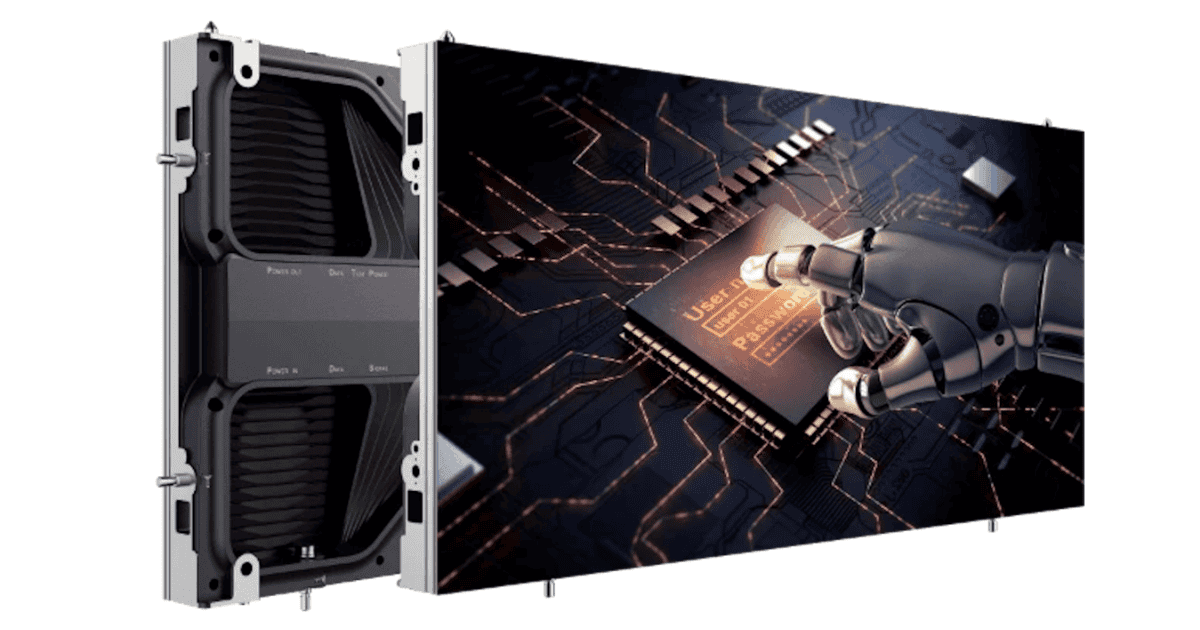
At the structural level, LED walls consist of multiple modular cabinets, each containing a grid of LED modules. This modular design means displays can be scaled to virtually any size or aspect ratio, and individual modules can be replaced without dismantling the entire structure. Thanks to their modular design, LED walls can be realized in virtually any format.
One of the most significant advantages of LED wall technology is the ability to operate in high-ambient-light environments. While a projector's image washes out in bright conditions, a sufficiently bright LED wall remains clearly visible even in direct sunlight.
Common applications span from corporate lobbies and retail environments to concert stages and sports arenas. As the technology matures and costs continue to decrease, LED walls are becoming increasingly accessible for medium-sized businesses and venues that previously relied on traditional display solutions.
What is an LED wall?
An LED wall is a modular display system consisting of many interconnected LED modules. This design allows it to be individually adapted to spatial conditions: from flat walls to curved shapes and even 360° installations.
The displays are robust and durable: high-quality LED walls are built for long operating times, making them ideal for 24/7 operation.
What does "LED" mean?
LED stands for Light Emitting Diode. These small semiconductor components generate light directly through current flow, without any backlight. The result:
- true black levels
- high contrast
- minimal energy loss (more details in our article about energy consumption)
Modern LED walls achieve high brightness values, ensuring clear visibility even in bright daylight.
How is an LED wall structured?
A typical LED wall consists of:
- Cabinets: housing units that contain individual modules
- Modules: contain power supplies, LEDs, fans, and cabling
- Video controllers: coordinate all image signals
The display is completely seamless, as the modules are precisely aligned with each other. The controller processes incoming signals and controls each LED precisely, enabling smooth, synchronized images in any shape and resolution.
Important terms: Pixel pitch, modules & panels
- Pixel pitch (mm): distance between two pixels. The smaller, the higher the resolution and image sharpness at close viewing distances.
- Rule of thumb: the closer the viewers stand to the wall, the smaller the pixel pitch should be.
- Panels/Modules: the individual building blocks containing RGB LEDs and capable of generating millions of colors through additive color mixing.
How does an LED wall work?
Electroluminescence: The principle behind LED
In an LED, light is generated when electrons flow through a semiconductor and meet "holes". When they recombine, light is produced (electroluminescence). The materials used determine the color of the light.
RGB color mixing
LEDs generate colors through additive mixing of red, green, and blue. Through pulse-width modulation (PWM), the intensity of each color is controlled, creating millions of color variations.
Control via controller
A central controller processes video data and sends synchronized control signals to each module. Modern systems also enable:
- Color calibration
- Brightness adjustment
- Temperature monitoring
LED wall advantages
1. Brightness & visibility in daylight
- Indoor and outdoor: outdoor LED walls need much higher brightness than indoor walls
- Ideal for all lighting conditions, even in direct sunlight
2. Lifespan & maintenance
- Long lifespan
- Front-serviceable: modules can be replaced during operation
3. Flexible shapes & formats
- Freely scalable
- Straight, curved, or 3D structures possible
- Seamless display without obstructive frames
4. Energy efficiency
- More efficient than LCD since only active pixels illuminate
- Light sensors save additional power
Where are LED walls used?
Events & stages
Concerts, conferences, trade shows: LED walls provide dynamism, visibility, and creative staging, even in outdoor areas.
Churches & community work
LED walls improve text readability and enable live transmission to other rooms. They promote interaction and modernity.
Companies & reception areas
In lobbies or at trade shows, LED walls create strong visual brand presence, with changeable content and striking design (more details in our article about business premises).
City marketing & outdoor advertising
Digital information boards, town entrance signs, or advertising walls: LED displays are weather-resistant, low-maintenance, and flexibly configurable.
Special features of modern LED walls
- Seamless appearance (no visible edges like LCD video walls)
- High resolution thanks to "fine pitch" technology
- Wide viewing angle
- Weather resistance for outdoor use
- Interactivity through touch or gesture control
| Feature | LED wall | Projector (more details in our article about LED wall vs. projector) / screen |
|---|---|---|
| Brightness | Very high, visible even in direct sunlight | Limited, only truly effective in darkened rooms |
| Black level & contrast | True black tones from switchable LEDs, high contrast | Gray-black from backlighting, lower contrast |
| Maintenance | Modular design, easy maintenance & hot-swap possible | Lamp replacement, filter cleaning, and regular service needed |
| Daylight use | Unrestricted use, including outdoor | Only conditionally suitable, dependent on room darkening |
| Modularity & scalability | Flexible sizes & shapes, expandable | Fixed image size, no expansion possible |
Conclusion: The future of visual communication shines brightly
LED walls combine brilliant image quality, extreme flexibility, energy efficiency, and durability in one system. Their modular design allows creative shapes and impressive installations, whether for companies, communities, or event venues.
Their advantages at a glance:
- Visibility in all lighting conditions
- Maintenance-friendly & durable
- Individually scalable & expandable
- Impressive "wow effect" with every use
If you're looking for a future-proof, high-performance, and versatile display solution, an LED wall is an investment that pays off in the long term.