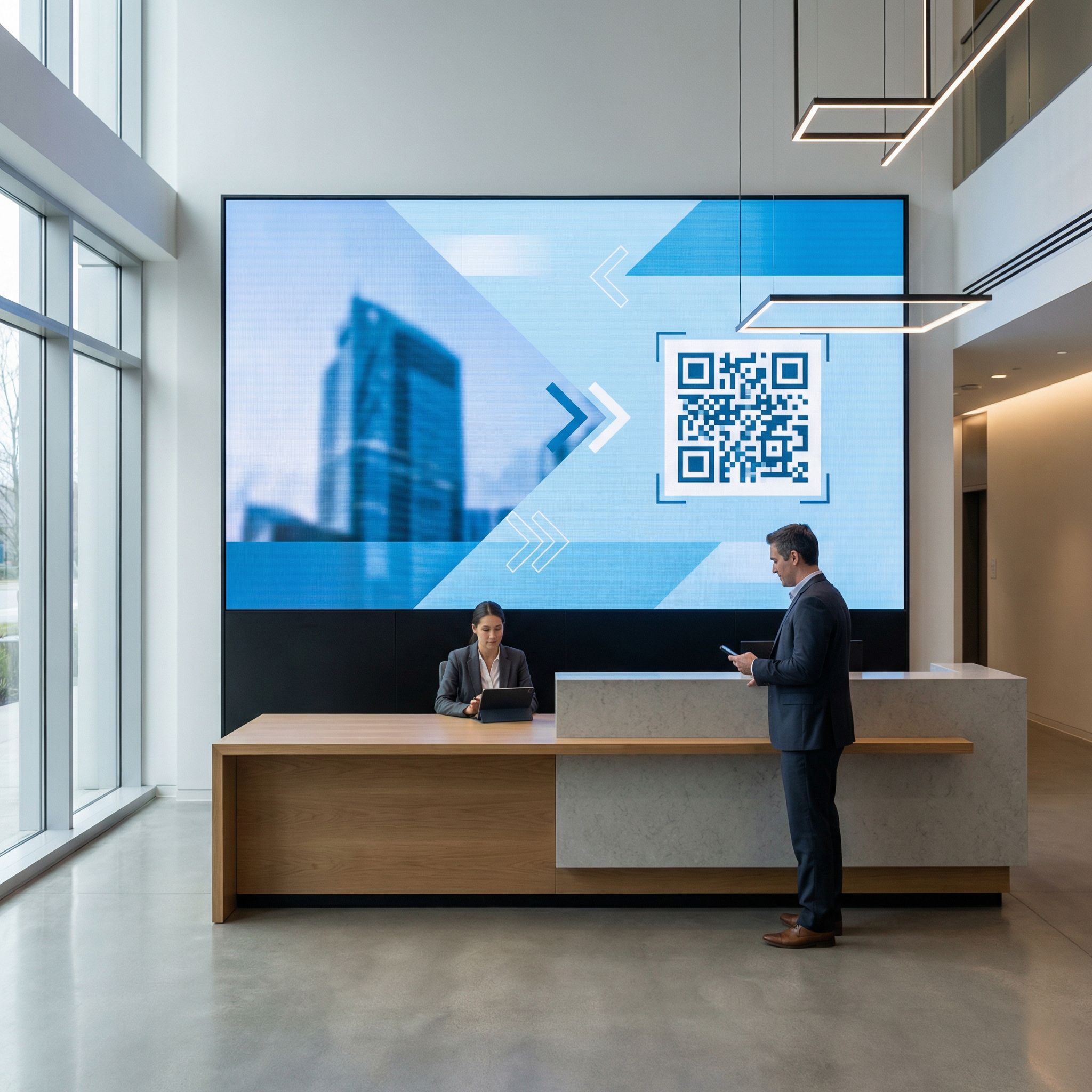

Benefits of an LED Wall in the Reception Area: B2B Value

Einzelnes Blog-Bild

Benefits of an LED Wall in the Reception Area: B2B Value

In B2B, the reception area is often the only place where external audiences physically experience a company. This is where central impressions form within minutes: How clear is the orientation? How professional are processes and security protocols? Does the presentation match the brand or does it appear random, cluttered, or outdated?

An LED wall can measurably support reception areas as a visual anchor for brand impact, as an information surface for visitor guidance, and as a channel for internal communication. At the same time, it quickly becomes a liability if operations, content, and integration are underestimated: missing content responsibility, unclear data protection rules, insufficient AV/IT interfaces, no monitoring or service processes, or ROI justification focused only on image.

This article helps B2B decision-makers realistically evaluate an LED wall in reception: What concrete benefits emerge, what technical and organizational framework is typical and how can the investment be soundly justified.

Brand Impact and Room Architecture: Why Reception is a Strategic Media Point

In brief: In B2B, brand impact develops primarily through trust and consistency. An LED wall can architecturally define the reception as a media point provided content and design are calm, brand-aligned, and suited to visitor context.

In B2B, brands are rarely built through impulse purchases but through recognition, reliability, and consistent signals. Reception concentrates these factors: visitors experience corporate design, security processes, staff, and room design in very short time. An LED wall can function as a digital architectural element that defines the space rather than merely displaying content.

A central advantage is visual presence: LED remains highly readable even in high ambient brightness, where LCD videowalls struggle with reflections or projectors appear low-contrast. For brand impact, what matters is less more animation but clear visual storytelling. In practice, these factors are particularly important: high-quality key visuals rather than cluttered layouts; calm motion elements rather than frantic effects; consistent typography and brand compliance; and an editorial calendar matching visitor context.

Real-world example: A technology facility uses the reception LED wall not as continuous advertising but as curated storytelling. Mornings display Today at a Glance content (site info, events, ESG metrics), daytime features subtle brand worlds alternating with project highlights, and VIP visits trigger specific welcome layouts. The effect is less showiness, more professionalism: visitors feel addressed without staff needing constant explanation.

A frequent decision argument is architectural flexibility. LED allows unusual formats: very wide panoramas, tall narrow panels, curved surfaces, or seamless wall integration. This enables companies to realize designs impossible with standard displays. Simultaneously, interior architecture, acoustics, and lighting design should be considered so the LED wall does not work against the space.

Visitor Information and Service: Real-Time Orientation, Safety, and Dynamic Content

In brief: Reception generates many operational information needs (wayfinding, rules, room availability). An LED wall can centrally, visibly, and in real-time display content provided roles, data protection, and priorities (especially emergencies) are defined.

Reception communication in B2B is often operational: wayfinding, safety notices, contacts, room bookings, delivery zones, or visitor badge instructions. An LED wall can consolidate this information in high visibility and update in real-time. This is especially relevant in campus structures, multi-tenant buildings, or frequent events where static signage quickly becomes outdated.

A typical use case is dynamic welcome: visitors see company name, appointment, and possibly host in a brand-compliant layout. This can be automated via visitor management system integration. The value extends beyond a professional impression to process quality: fewer reception desk inquiries; reduced wait time; and fewer visitor assignment errors.

Safety also benefits: evacuation or assembly point information, access rule notices, or current outages (e.g., elevator down) can be instantly deployed. Important is clear prioritization logic: during normal operations, branding and service content run, but during incidents, emergency notices must safely take precedence. This requires defined workflows and technical priority switching rather than manual re-tuning by reception staff.

Internal Communication at the Front Door: HR, ESG, Culture, and Site Connectivity

In brief: Reception is not only externally relevant but also an internal anchor point. An LED wall can make internal updates visible and standardize across locations provided content operations, timeliness, and approvals are properly organized.

Reception addresses not only external visitors. In hybrid work models, it's also an internal touchpoint: employees visit less frequently but more intentionally and expect orientation and relevant updates. An LED wall can make internal communication visible without requiring staff to actively search channels. This is particularly effective for safety notices, site information, and culture content.

Operations, Integration, and ROI: AV/IT Requirements, Maintenance, and Business Justification

In brief: An LED wall in reception is an AV system to be operated (not just installed). Specification, AV/IT integration, security, monitoring, service, and content processes determine whether value remains stable over years and ROI is soundly arguable.

An LED wall in reception is a professional AV system and should be planned accordingly: with defined SLAs, security concept, monitoring, and clean AV/IT integration. Economic evaluation succeeds when benefits and operating costs are transparent. Critical is that the system is not just installed but sustainably operated over years.

Sustainable success depends on clear AV/IT integration, security, service, and content process requirements. Those who clarify these early and derive ROI through process and quality metrics can soundly justify the LED wall and establish it long-term as a stable communication channel.

Cta V3 Bild
Artikel von

Kampro

Blog-Share-SymbolBlog-Share-SymbolBlog-Share-Symbol
Share on:
Blog Share IconBlog Share IconBlog Share IconBlog Share Icon

Benefits of an LED Wall in the Reception Area: B2B Value

In B2B, the reception area is often the only place where external audiences physically experience a company. This is where central impressions form within minutes: How clear is the orientation? How professional are processes and security protocols? Does the presentation match the brand or does it appear random, cluttered, or outdated?

An LED wall can measurably support reception areas as a visual anchor for brand impact, as an information surface for visitor guidance, and as a channel for internal communication. At the same time, it quickly becomes a liability if operations, content, and integration are underestimated: missing content responsibility, unclear data protection rules, insufficient AV/IT interfaces, no monitoring or service processes, or ROI justification focused only on image.

This article helps B2B decision-makers realistically evaluate an LED wall in reception: What concrete benefits emerge, what technical and organizational framework is typical and how can the investment be soundly justified.

Brand Impact and Room Architecture: Why Reception is a Strategic Media Point

In brief: In B2B, brand impact develops primarily through trust and consistency. An LED wall can architecturally define the reception as a media point provided content and design are calm, brand-aligned, and suited to visitor context.

In B2B, brands are rarely built through impulse purchases but through recognition, reliability, and consistent signals. Reception concentrates these factors: visitors experience corporate design, security processes, staff, and room design in very short time. An LED wall can function as a digital architectural element that defines the space rather than merely displaying content.

A central advantage is visual presence: LED remains highly readable even in high ambient brightness, where LCD videowalls struggle with reflections or projectors appear low-contrast. For brand impact, what matters is less more animation but clear visual storytelling. In practice, these factors are particularly important: high-quality key visuals rather than cluttered layouts; calm motion elements rather than frantic effects; consistent typography and brand compliance; and an editorial calendar matching visitor context.

Real-world example: A technology facility uses the reception LED wall not as continuous advertising but as curated storytelling. Mornings display Today at a Glance content (site info, events, ESG metrics), daytime features subtle brand worlds alternating with project highlights, and VIP visits trigger specific welcome layouts. The effect is less showiness, more professionalism: visitors feel addressed without staff needing constant explanation.

A frequent decision argument is architectural flexibility. LED allows unusual formats: very wide panoramas, tall narrow panels, curved surfaces, or seamless wall integration. This enables companies to realize designs impossible with standard displays. Simultaneously, interior architecture, acoustics, and lighting design should be considered so the LED wall does not work against the space.

Visitor Information and Service: Real-Time Orientation, Safety, and Dynamic Content

In brief: Reception generates many operational information needs (wayfinding, rules, room availability). An LED wall can centrally, visibly, and in real-time display content provided roles, data protection, and priorities (especially emergencies) are defined.

Reception communication in B2B is often operational: wayfinding, safety notices, contacts, room bookings, delivery zones, or visitor badge instructions. An LED wall can consolidate this information in high visibility and update in real-time. This is especially relevant in campus structures, multi-tenant buildings, or frequent events where static signage quickly becomes outdated.

A typical use case is dynamic welcome: visitors see company name, appointment, and possibly host in a brand-compliant layout. This can be automated via visitor management system integration. The value extends beyond a professional impression to process quality: fewer reception desk inquiries; reduced wait time; and fewer visitor assignment errors.

Safety also benefits: evacuation or assembly point information, access rule notices, or current outages (e.g., elevator down) can be instantly deployed. Important is clear prioritization logic: during normal operations, branding and service content run, but during incidents, emergency notices must safely take precedence. This requires defined workflows and technical priority switching rather than manual re-tuning by reception staff.

Internal Communication at the Front Door: HR, ESG, Culture, and Site Connectivity

In brief: Reception is not only externally relevant but also an internal anchor point. An LED wall can make internal updates visible and standardize across locations provided content operations, timeliness, and approvals are properly organized.

Reception addresses not only external visitors. In hybrid work models, it's also an internal touchpoint: employees visit less frequently but more intentionally and expect orientation and relevant updates. An LED wall can make internal communication visible without requiring staff to actively search channels. This is particularly effective for safety notices, site information, and culture content.

Operations, Integration, and ROI: AV/IT Requirements, Maintenance, and Business Justification

In brief: An LED wall in reception is an AV system to be operated (not just installed). Specification, AV/IT integration, security, monitoring, service, and content processes determine whether value remains stable over years and ROI is soundly arguable.

An LED wall in reception is a professional AV system and should be planned accordingly: with defined SLAs, security concept, monitoring, and clean AV/IT integration. Economic evaluation succeeds when benefits and operating costs are transparent. Critical is that the system is not just installed but sustainably operated over years.

Sustainable success depends on clear AV/IT integration, security, service, and content process requirements. Those who clarify these early and derive ROI through process and quality metrics can soundly justify the LED wall and establish it long-term as a stable communication channel.
Cta V3 Image
Article by

Kampro

Blog Share IconBlog Share IconBlog Share Icon