

LED Wall or Projector? The Decision Guide for Professionals
You're sitting in a conference room and asking yourself: projector or LED wall? It's a question professionals face regularly. And honestly, there is no universal answer. But there are plenty of factors that help you make the right decision. At Kampro, we have shed light on the topic (literally), and with this decision guide we want to help you along the way.
The technology has developed rapidly in recent years. What was unthinkable just five years ago is standard today. And at the same time, that makes it harder to make the right choice. That's why we decided to look at this comparison from a professional perspective. Not for home users, but for companies that want to modernize their spaces.
The Basics: How Do an LED Wall and a Projector Work?
Let's start with the technical understanding. It is the foundation for everything that follows. A projector works on a relatively simple principle: light is projected onto a screen through optics and lens systems. An LED wall, on the other hand, works completely differently. Here you have hundreds of thousands of tiny light emitters that produce colors directly.
The Projector: Light and Lens Systems
With a projector, the moving parts are both the core problem and the strength. The lamp or light source emits light, which complex optical systems then project onto the wall. That requires precise alignment and regular maintenance, and it is prone to wear. But: you only need one device. One lamp, one set of optics, one projector. That is simple and cost-effective.
The LED Wall: A Pixel-Based Light Source
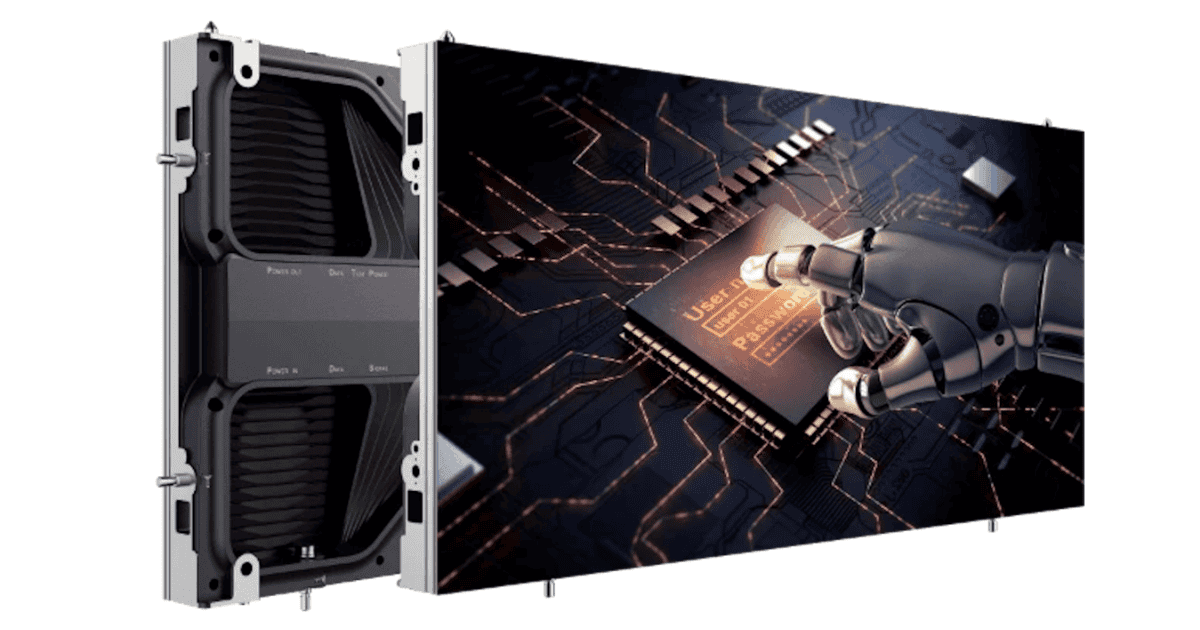
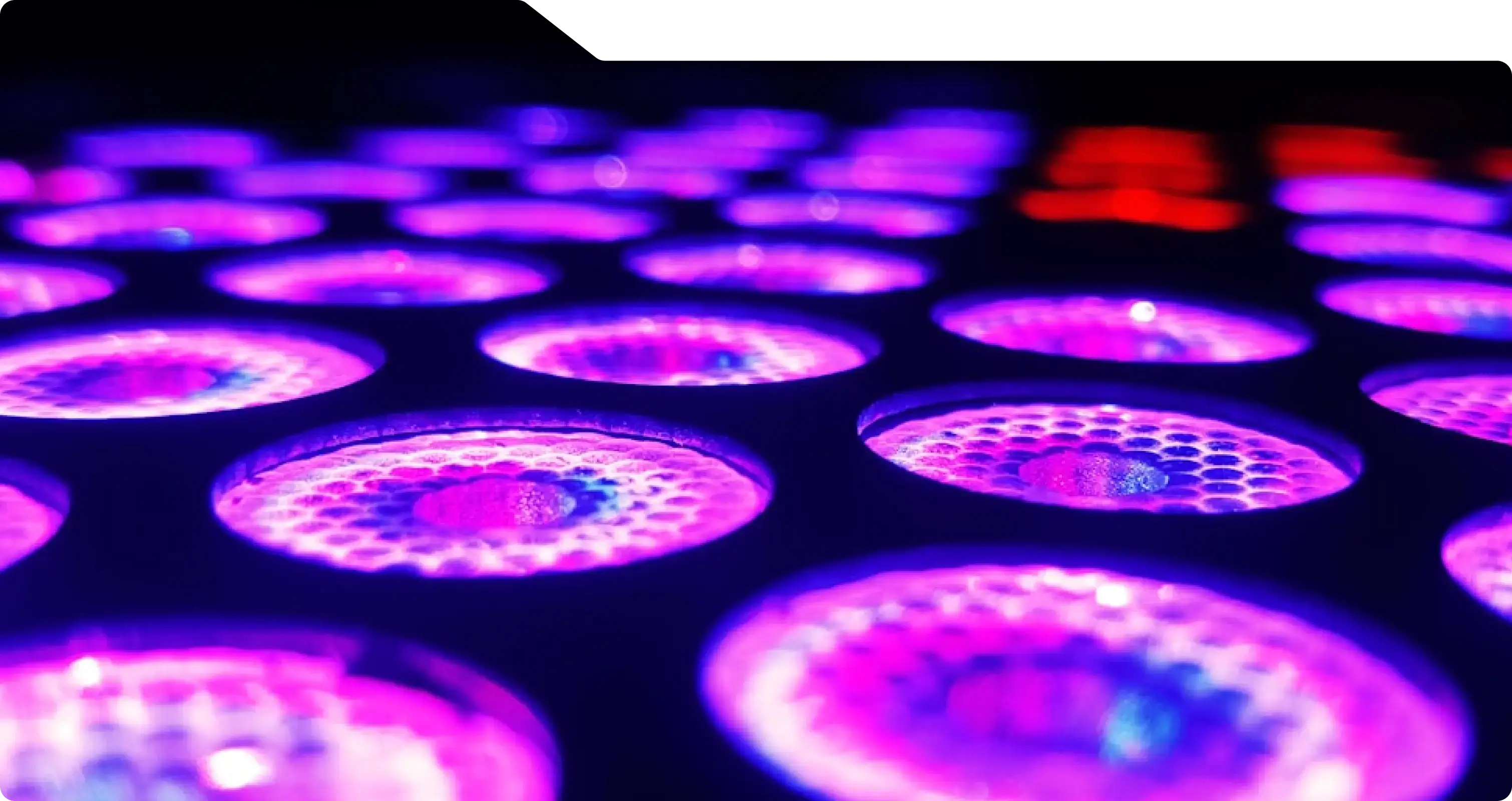
The LED wall is different. Here you have thousands of LED clusters, each with red, green and blue components. They are controlled electronically and create the image directly. No lenses, no redirecting of light, just direct light emission. That also means: with an LED wall like our Unilumin UTV SC Series, you get direct, even light without optical distortion.
Brightness Compared: Understanding Nits and Lumens
This is where it gets interesting, and unfortunately also confusing. With projectors, we talk about lumens. With LED walls, about nits. But what does that mean in practice?
Lumens measure the total amount of light a projector emits. A professional projector might have 4,000 to 6,000 lumens. That sounds like a lot, but: the light is spread over a large area. If your room is large or has a lot of ambient light, the projection looks washed out and colorless.
Nits, on the other hand, measure luminance, meaning how bright a given surface is. A good LED wall has 1,500 to 4,000 nits. That is more intense than it sounds. Why? Because this light is concentrated and comes directly from your display. It is not reflected off the wall, as it is with a projector.
In concrete terms: under normal office lighting, a projected image simply doesn't look good. The ambient light washes out the projection. An LED wall, especially one with high brightness, dominates the room no matter how much daylight comes in.
Image Quality and Contrast: Where Is the Difference?
This is where it gets emotional. Image quality is something you feel before you measure it. And that matters.
Contrast and True Black
A projector projects light onto a white surface. Even the blackest black is really just "less light." That is the fundamental limitation of the projector. Even premium devices cannot display true black. It is always a dark gray.
An LED wall, on the other hand, can switch its LEDs off. When a pixel should be black, it is off. That means real, true black. The contrast is infinite, or at least practically infinite. You notice it right away, at first glance. Videos, photos and presentations look more vivid. More intense. More realistic.
Color Accuracy and Viewing Angle
Projectors have one advantage: colors are standardized and very accurate. If you have a high-end projector, your colors are consistent. With LED walls, this is more difficult. Every chip has small variations. That's why calibration is important. But: modern LED walls, especially the newer models, achieve high color uniformity. That is sufficient for professional applications.
Another point: the viewing angle. With a projector, it doesn't matter where you sit; the projection looks the same everywhere. With LED walls, it's different. From the side, the image gets darker and the colors shift. But this, too, is something good products have optimized. And for conference rooms or control rooms, where viewers sit centrally, it is not a problem.
Room Lighting Requirements: Ambient Light and Blackout
Let's be honest: this is one of the most important criteria. And it is often overlooked.
A projector needs a darkened room. Period. Not just slightly dimmed, but really dark. That means roller blinds, blackout curtains, sealed windows. A 2 p.m. meeting in bright sunlight? A nightmare with a projector. You either have to black out the room completely or put up with a pale, flat projection.
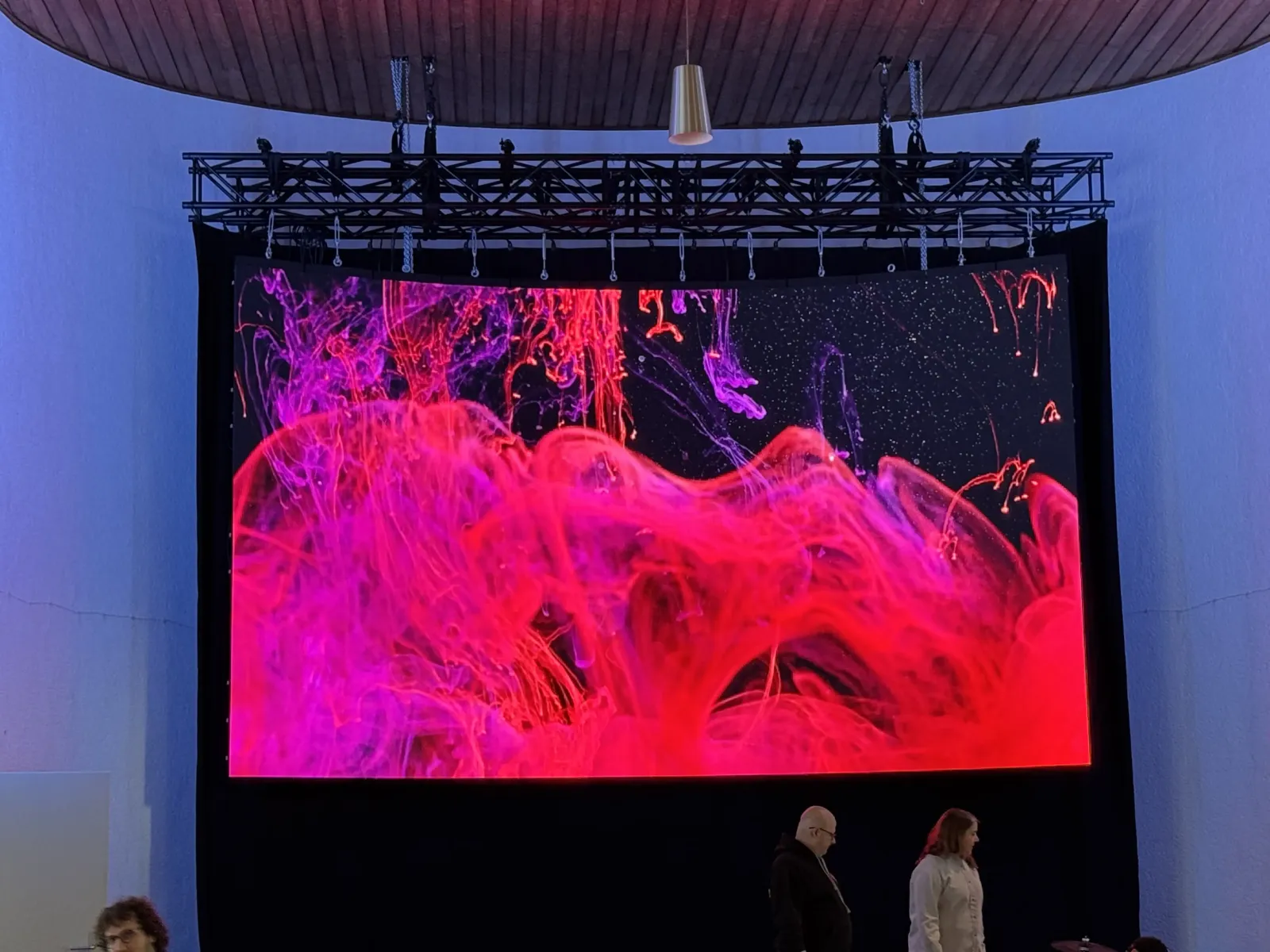
An LED wall doesn't care about ambient light. You can have full sunlight, and the display stays bright, high-contrast and easy to read. That is a huge practical advantage for modern offices with plenty of daylight. No blacking out, no energy wasted on additional lighting.
That is also one reason why retail, control rooms and command centers prefer LED walls. The displays are always visible and always usable, regardless of the time of day or the weather.
Total Cost Over 5 Years: The Real Expenses
Now it's about cost-effectiveness. And here, the numbers don't lie.
Projector: Purchase vs. Operation
A good business projector is comparatively inexpensive to buy. That is the first point. But (and this is crucial) that is only where it starts.
Projector lamps only last a limited number of operating hours. If your room uses the projector for many hours a day, a lamp replacement comes around quickly. Over the years, that adds up to several lamp replacements, and every new lamp costs extra.
Then there is maintenance and cleaning. Filters get dirty, optics need cleaning. These are not massive costs, but they are ongoing expenses.
And, not to be forgotten: if the projector fails, you have no picture at all. Period. That is a risk many people underestimate.
LED Wall: Higher Investment, Lower Operating Costs
A good LED wall costs significantly more to buy than a projector, and that hurts the budget. At Kampro, indoor LED walls cost from €1,300 per square meter to buy, excl. controller, accessories and installation, plus VAT. Configure your LED wall in a few minutes and request a quote.
But after that: no lamp replacements. No expensive service calls. And, importantly, LED walls are modular. If a module fails, you replace exactly that module. Not the whole wall.
Power consumption? This is where it gets interesting. An LED wall uses more power than a projector at the same brightness. But not many times more. And if you consider that the projector runs only 8 hours a day and needs a darkened room, an LED wall with sensor-controlled brightness is more efficient in practice.
Over several years, the LED wall pays off for heavy use. For occasional use, the projector remains the more attractive option.
Maintenance, Durability and Flexibility
Maintenance is where many professionals come down on the side of LED walls. And there are good reasons for that.
Maintenance Effort in Detail
Projectors are maintenance-intensive. The lamp ages. The optics collect dust. The fans get loud. After a few years, you need servicing. If you're unlucky, the entire electronics fail.
LED walls need little maintenance. Dust on the surface? Wipe it off. Done. The electronics are built with redundancy. If one controller fails, the next one takes over. If a module has problems, you swap it. No total failure, no long service times.
Lifespan and Investment Security
After a few years, a projector reaches the end of its life. Not technically broken, but the optics and electronics become outdated. Repairing it is no longer worth it.
With an LED wall, you replace individual modules, not the whole wall. And when it gets old? The modules can be updated. You can upgrade individual components. That is future-proof.
On top of that, pixel pitch and resolution technology keep evolving. With projectors, that's the end of the road. An LED wall with a modular design can grow with the future.
Applications: Where Does Each Technology Win?
There are clear scenarios in which each technology plays to its strengths.
The Projector Is the Right Choice If...
...you have a large, darkened room that is rarely used. A training room with exterior blinds is perfect for a projector. Occasional presentations, low usage, a room that can be darkened. In that case, the projector saves you a lot of money.
A projector also makes sense for smaller rooms under 15 square meters. And for special applications such as cinema-like content in darkened environments.
The LED Wall Is the Right Choice If...
...you have a room with lots of daylight. A modern office with large windows? The LED wall wins. For high-traffic areas such as a reception area, showroom or control room, the LED wall is also the superior choice.
If your room is occupied 24/7 or used for frequently changing purposes, the LED wall pays off over several years. And: if you need a professional appearance, the LED wall is not just an option; it is the only real statement.
For meeting rooms you want to plan professionally, the LED wall is also the forward-looking choice.
Future Trends and Developments
Where is it all heading? That's a good question. And the answer is interesting.
Projectors are a mature technology. There are innovations, but no real breakthroughs. Brighter lamps, better optics, but the basic concept stays the same.
LED walls are developing rapidly. Energy efficiency improves year after year. Pixel pitch keeps getting smaller, which means higher resolutions on the same area. Micro-LED promises even better colors and even thinner devices.
And one important trend: interactivity. Modern LED walls can integrate touch functions. Projectors can't. That is an advantage that is becoming more and more important.
Also, the cost of LED walls is trending downward. As the technology matures, prices fall, and the price gap between projectors and LED walls narrows. That is a trend worth watching.
If your company wants to modernize its meeting room, one thing is clear: the future belongs to LED walls. And so does the present.
Sources and Further Reading
If you'd like to learn more, we recommend the following articles and resources:
LED Wall vs. Projector: A Technical Comparison (in German) offers even more technical detail on the head-to-head comparison.
For the cost analysis, our guide to calculating LED wall costs is valuable. There you will find concrete figures and calculation models.
LED Video Wall Maintenance gives you practical tips on upkeep and long-term care.
And of course: take a look at our Unilumin UTV SC Series. It has everything professionals need.
Questions? Contact us. We'll help you make the right decision, whether it's a projector or an LED wall.