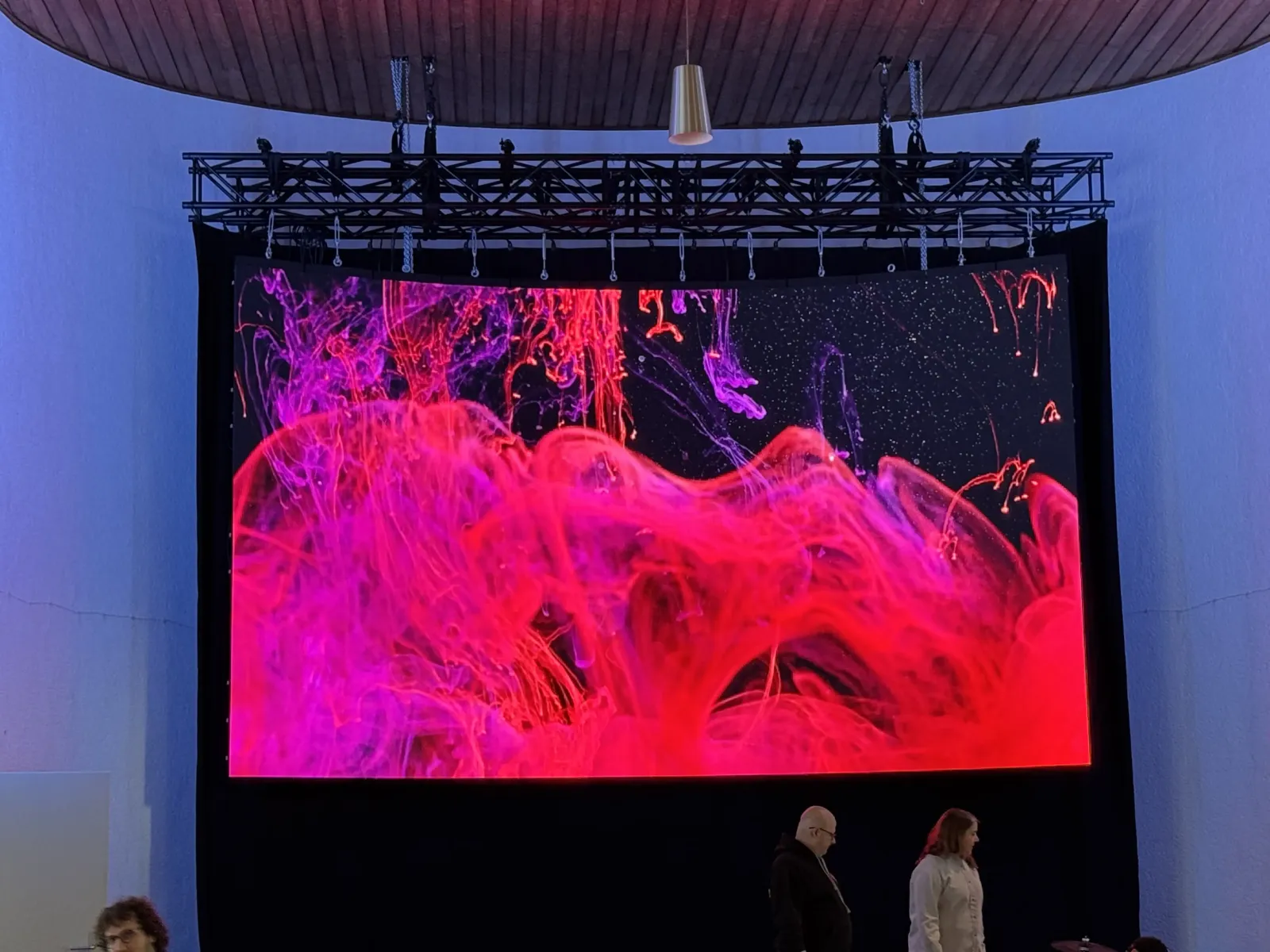
In 2026, LED walls are no longer just an event or marketing tool; they are part of strategic infrastructure. Companies use them in lobbies, control rooms, conference centers, retail spaces and production environments, with a direct impact on communication, brand perception and operational processes.
For decision-makers, the question is no longer whether an LED wall makes sense, but how to size it correctly from a technical, economic and organizational point of view. Pixel pitch, design type, energy consumption, integration capability and service concept largely determine how secure the investment is.
This guide structures the relevant decision factors: from the technological basics and typical use cases to cost structure and market trends in 2026. The goal is reliable guidance for management, marketing, engineering and planning teams.
If you already know that you want to buy an LED wall, you will find prices and the process on Buy an LED wall →.
Technological basics of an LED wall
Key takeaways: The performance of an LED wall results from the interplay of pixel pitch, design type, signal processing, brightness and mechanical precision. Individual specs can only be assessed meaningfully in context.
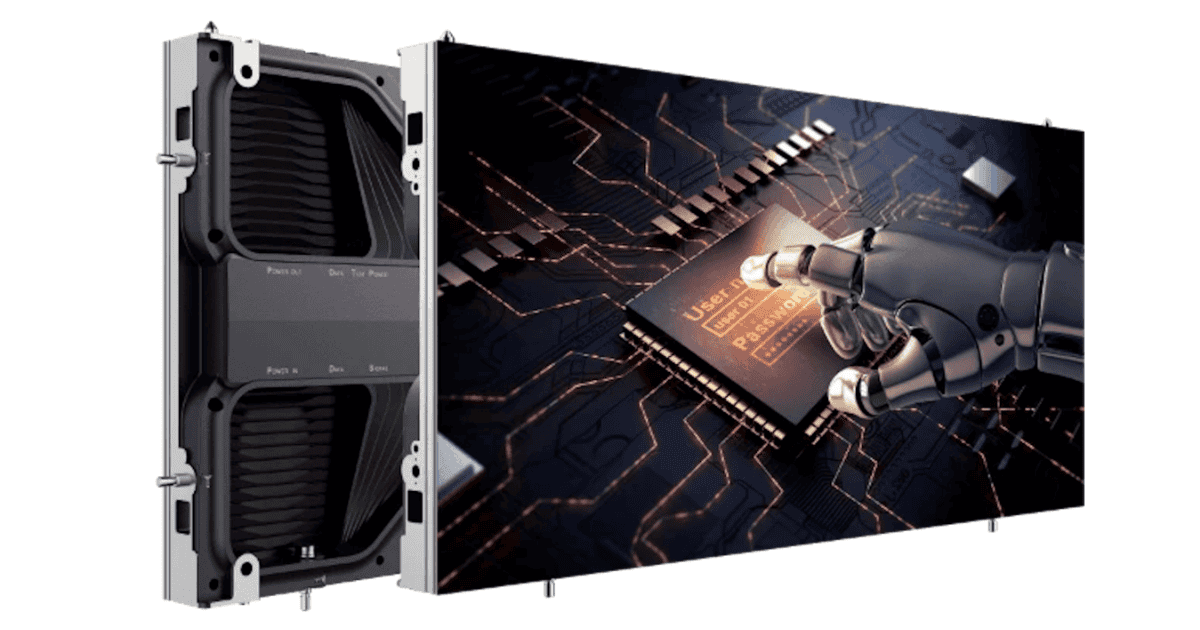
An LED wall consists of modular LED panels that are joined seamlessly into one large display. Unlike LCD displays, every single LED produces its own point of light. This results in:
- High brightness and contrast: Every pixel emits its own light, and blacks stay deep, even in bright rooms.
- Seamless surfaces: The modules join without visible bezels, unlike an LCD video wall.
- Wide viewing angles: High-quality LED walls offer 160° or more, horizontally and vertically.
- Flexible formats: Size and aspect ratio are determined by the number of modules.
You will find a direct comparison in LED or LCD video wall → (in German) and LED wall or projector →.
A key spec is the pixel pitch, the distance between two pixels in millimeters. The smaller this value, the higher the resolution at shorter viewing distances. Typical ranges (guide values):
- Control rooms and operations centers: P0.9 to P1.5, viewing distance 1 to 3 m
- Conference room: P1.2 to P1.8, 2 to 4 m
- Showroom and reception: P1.5 to P2.5, 2 to 5 m
- Trade show and event: P2.5 to P3.9, 3 to 10 m
- Outdoor: P3.9 to P10, from 5 m
Learn more in the article Pixel pitch for LED walls explained →.
In terms of technology, three design types dominate:
- SMD (Surface-Mount Device): Individual LED components are mounted on the circuit board. The proven standard with the best value for money, strong for trade shows, events and outdoor use.
- COB (Chip-on-Board): The LED chips sit directly on the board under a continuous protective layer. More robust and more uniform at short distances, which is why it is often the choice for fine pitch in conference and control rooms.
- MicroLED: Very small chips for the finest pixel pitches. Excellent image quality, so far limited to the premium segment and expensive.
Brightness, too, has to be assessed in context. Indoor LED walls typically reach 600 to 1,500 nits, outdoor installations 4,000 to 8,000 nits. What matters for the decision is less the maximum value than adaptive brightness control, which optimizes energy use and reduces glare.
The article Brightness and nits for LED walls → (in German) shows which values you really need.
Signal processing has a major influence on image quality and integration capability. Modern systems offer:
- High refresh rate: at least 1,920 Hz, and 3,840 Hz or more for camera and broadcast use
- Fine grayscale: 14 to 16 bit for smooth color gradients
- Flexible inputs: HDMI, LAN, Wi-Fi or 4G, depending on the controller
- Central control: content and brightness via software, remotely as well
The available connection options are explained in Controlling an LED wall → (in German).
For broadcast or XR applications, synchronization capability and camera optimization (e.g., shutter adjustment) are also essential.
The quality of an LED wall is therefore not defined by resolution alone. What counts is the interplay of pixel pitch, calibration, color uniformity, driver technology and the mechanical precision of the modules.
Applications and strategic benefits in B2B
Key takeaways: LED walls create scalable visual infrastructure. Their strategic benefit comes from central control, high visibility and flexible integration into business processes.
Today, the LED wall is a versatile communication tool, both internally and externally. Its scalability enables applications that conventional displays could deliver only to a limited extent, technically or economically.
In retail, large LED walls are used to stage the brand. Flagship stores become immersive experiences in which digital content and architecture work together. Dynamic LED surfaces catch the eye and can increase dwell time.
In corporate environments, LED walls are used in lobbies, showrooms and conference centers. They serve as an information and image platform and are increasingly replacing projection solutions, especially where consistent image quality and reduced maintenance are critical.
Other relevant applications:
- Control rooms and operations centers: continuous operation with high image stability, see Control room
- Trade shows and events: fast setup and large surfaces, see Events
- Restaurants and hotels: atmosphere, menus and guest information, see Hospitality
- Studio and broadcast: backdrops for virtual production and XR
For an overview of all industries, see Applications of LED walls → (in German).
Strategically, an LED wall makes it possible to centralize visual communication. Content can be controlled, updated and analyzed across locations. Combined with CMS and data platforms, this creates an integrated digital signage infrastructure.
What matters is a system-level view: the added value comes from the interplay of hardware, content strategy, IT integration and clearly defined processes.
Planning, integration and typical decision questions
Key takeaways: A precise needs analysis reduces investment risk. Viewing distance, ambient light, architecture and IT integration matter more than resolution figures alone.
Implementation starts with a structured analysis of how the wall will be used. The key parameters are:
- Where will the LED wall be installed: indoors, outdoors or semi-outdoors, for example in a shop window?
- How much space is available, and what display size do you need?
- From what distance will the image mostly be viewed?
- What content will run: text, tables, images, video or live feeds?
- How bright is the room, and does direct sunlight fall on the surface?
- Will it be permanently installed or used as a mobile, temporary setup?
A common planning mistake is to focus solely on maximum resolution without considering the real application.
Architectural integration is critical as well. In particular, consider:
- Load-bearing capacity of the wall or substructure
- Power supply and network connections
- Ventilation and heat dissipation
- Maintenance access: from the front (front service) or from the back (rear service)
How mounting and the process work is shown in Installing LED walls →.
For flush-mounted installations, front service access often makes sense to minimize maintenance time.
Typical decision questions in a B2B context:
- Buy or rent? Buying usually makes sense for permanent use, renting for individual events. Decision guide: Buying or renting an LED wall → (in German)
- LED or LCD? LED for large, seamless and bright surfaces, LCD for smaller formats on a smaller budget.
- SMD or COB? COB for short viewing distances and heavy use, SMD for the best value for money.
- Indoor or outdoor? Outdoors you need more brightness and at least IP65, see Outdoor or indoor LED wall → (in German).
Energy efficiency matters especially with long operating hours. Modern systems feature automatic brightness adjustment and optimized power supplies. Even so, you should calculate power consumption in relation to the planned use, especially for 24/7 applications. Learn more in Energy efficiency of LED walls →.
Service and maintenance concepts have a significant impact on overall cost-effectiveness. High-quality systems let you replace individual modules without visible color deviations. Regular calibration ensures long-term image uniformity. What matters is explained in Maintaining LED walls →.
Sound planning ensures that the LED wall reliably fulfills its strategic role for many years.
Cost structure, cost-effectiveness and market trends in 2026
Key takeaways: The cost-effectiveness of an LED wall depends on system costs, operating time, maintenance effort and strategic benefit. In 2026, the focus is shifting from pure hardware to integrated display ecosystems.
The investment costs are made up of:
- LED modules, controllers and substructure
- Installation and commissioning
- Media players and content software
- Power, maintenance and service during operation
The price per square meter varies with pixel pitch and technology. At Kampro, indoor LED walls cost from €1,300 per square meter, excl. controller, accessories and installation, plus VAT. The biggest levers are pixel pitch and size. You will find prices by category on Buy an LED wall →, and how the costs break down in LED wall costs →. Configure your LED wall in a few minutes and request a quote.
For a reliable cost-effectiveness analysis, consider the following factors:
- Operating hours per day and per year
- Power consumption at typical, not maximum, brightness
- Maintenance, calibration and spare modules
- Lifetime according to the manufacturer's data sheet
- Costs that go away, such as printing, poster changes or projector lamps
A key market trend in 2026 is the standardization of modular LED systems. Preconfigured complete solutions for conference rooms or retail spaces shorten planning times. At the same time, demand for energy-efficient drivers and more sustainable production methods is rising.
COB technology is gaining market share in the corporate segment, while MicroLED continues to evolve in the premium segment but remains expensive. Integration into AV-over-IP environments is increasingly becoming the standard.
In the long run, the focus is shifting from one-off hardware investments to holistic display ecosystems. Content management, data integration and remote management have a major influence on ROI.
Frequently asked questions about LED walls
When you invest in an LED wall, similar questions come up again and again. The following answers give you a compact overview.
Which pixel pitch makes sense at a viewing distance of about 3 meters?
At a viewing distance of around 3 meters, a pixel pitch of about 1.2 to 1.8 mm is usually sufficient in typical conference or meeting rooms. What matters most, however, is the type of content: fine tables or CAD data require a smaller pixel pitch than simple presentation slides. Viewing samples under real conditions is recommended.
LED wall, LCD video wall or projector: which solution is right for conference rooms?
LED walls offer high brightness, seamless surfaces and low susceptibility to faults in continuous operation. LCD video walls are attractive in terms of cost but have visible bezels. Projectors are suitable for temporary installations but are more sensitive to ambient light and require more maintenance.
How is the power consumption of an LED wall calculated?
Power consumption is usually specified in watts per square meter and depends on brightness, content and operating mode. For reliable planning, consider both maximum and average values. For larger installations, plan for load management, circuit protection and, if necessary, UPS concepts.
Which IP rating is required for an outdoor LED wall?
For permanently installed outdoor applications, at least IP65 on the front is typically recommended. Depending on the location, there may be additional requirements for the housing, electronics and corrosion protection. Temperature and humidity management should also be part of the assessment.
Which refresh rate is needed for camera-optimized applications?
Broadcast, XR or hybrid event formats require high refresh rates and suitable driver technology to avoid flicker. In practice, systems with PWM frequencies of several thousand hertz, tuned to the cameras, are used. Coordination between the LED manufacturer and the production team is essential.
Which service level agreements (SLAs) are common in B2B projects?
In enterprise projects, common market practice includes defined response times, availability of spare modules and clearly defined pixel failure policies. On-site service or guaranteed replacement times are often agreed as well. Transparent warranty terms and documented service processes are key evaluation criteria.
How do you realistically assess the total cost of ownership (TCO) over the service life?
In addition to the initial investment, factor in energy consumption, maintenance, calibration, spare parts and any software licenses. Organizational effects such as lower printing costs or additional revenue potential also feed into the assessment. A calculation based on the full life cycle provides a solid basis for decisions.
Conclusion
In summary, the LED wall in 2026 is a mature, scalable and strategically relevant display technology. It combines strong visual impact with long-term cost-effectiveness and flexible integration into digital business processes.
For B2B decision-makers, the success of an LED wall depends less on individual technical specs than on holistic planning. If you think about technology, architecture, content and operations together from the start, you create sustainable visual infrastructure with measurable added value.
Planning an LED wall? Use the LED wall planner to put together size and pixel pitch, or talk to us directly.
Sources and notes
- Pixel pitch and viewing distance: Christie, Understanding LED Video Wall Pixel Pitch (accessed October 31, 2026)
- SMD and COB compared: Dicolor, COB vs SMD Comparison Guide (2025) (accessed October 31, 2026)
- Kampro prices: Buy an LED wall page, as of November 15, 2026, all prices excl. controller, accessories and installation, plus VAT
- Technical guide values such as brightness, refresh rate and lifetime may vary by manufacturer and model.