
LED Wall Controller in Reception Area: Selection Criteria for B2B

Einzelnes Blog-Bild

LED Wall Controller in Reception Area: Selection Criteria for B2B

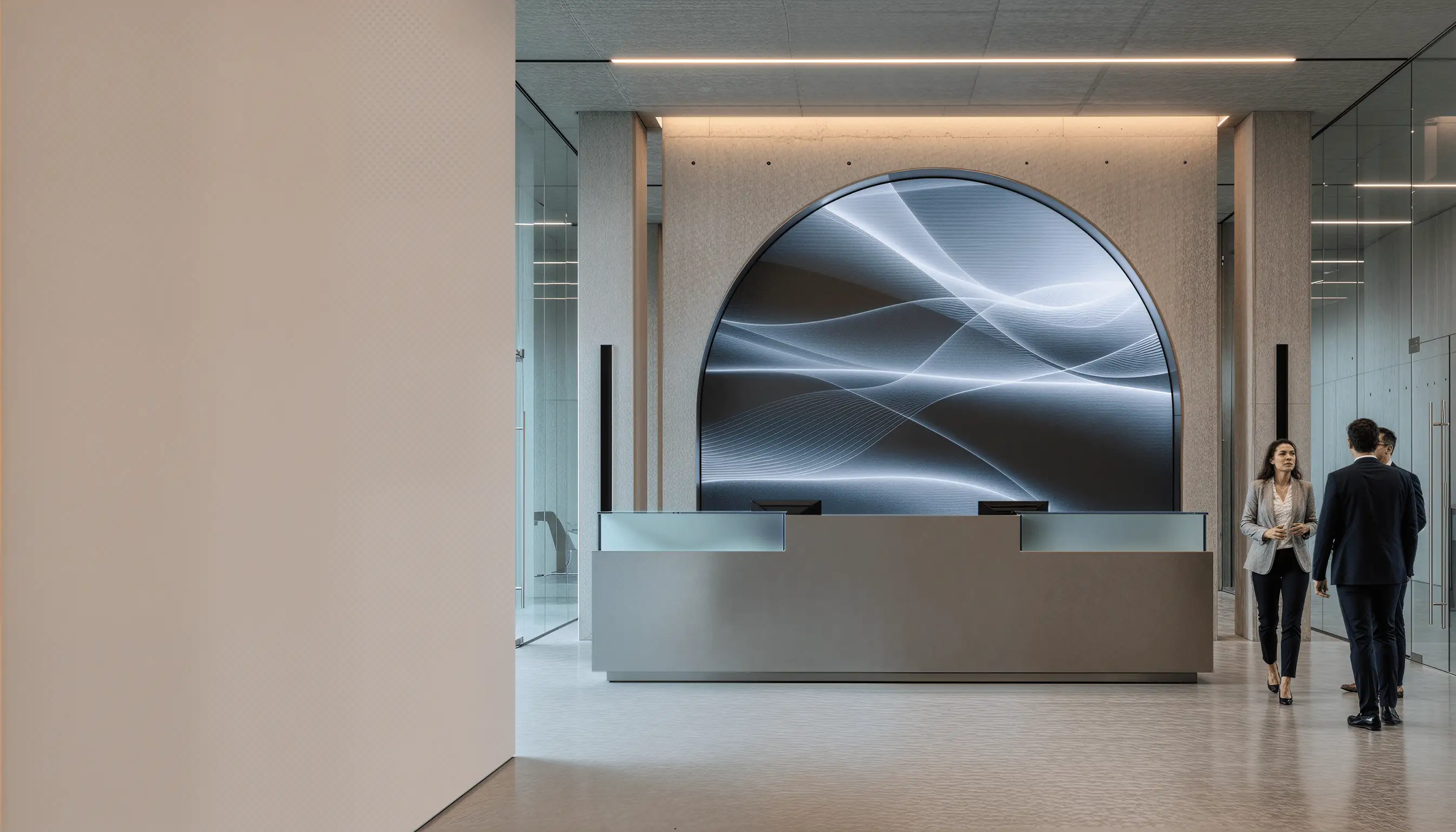
An LED wall in reception is a critical touchpoint: it shapes first impression, must reliably display information, and is operated by different roles in daily use (reception, facility, IT, AV). In practice, problems rarely stem from LED modules themselves but from unclear signal paths, inappropriate scaling, missing presets, or absent operational processes around the controller.

The following guide structures key controller selection criteria for reception areas: from signal sources and resolution workflows through latency and operational safety to AV/IT integration and digital signage. The goal is sound decision-making that works both in specification and daily operations.

1) Operational Profile in Reception: Content, Viewing Distances, and Operational Reality

In brief: In reception, success does not depend on maximum pixel count but on actual usage patterns: content, switching frequency, operator roles, and failure consequences. The clearer the usage profile, the less complexity lands in daily operations.

Reception is special: the LED wall often runs 10–16 hours daily, is operated by varying staff, and must look right in seconds. Meanwhile, viewing distance varies greatly: guests stand a few meters away, waiters sit further back, and the wall should often work from oblique angles too. For controller selection, this means maximum pixel count matters less than planned content and operational processes.

2) Signal Sources, Resolution, and Scaling: From Laptop to Digital Signage

In brief: In reception, port count matters less than stable, traceable resolution flow: sources must be reliably recognized, cleanly scaled, and properly mapped to the (often non-standard) LED pixel matrix. EDID, scaling, or mapping logic errors become quickly visible here.

3) Latency, Image Quality, and Synchronicity: What Really Matters in Reception

In brief: In reception, latency and image quality are mainly critical when content includes live sources alongside signage. The complete chain (source to LED panel) should be evaluated, not single datasheet specs.

4) Operational Safety, Maintenance, and AV/IT and Digital Signage Integration

In brief: In reception, a controller is primarily an operational component: recovery after power events, defined fallbacks, monitoring, roles/rights, and update capability often matter more than feature breadth. Without clear AV/IT and signage process integration, the controller quickly becomes an organizational risk.

Conclusion: Selecting an LED wall controller for reception best succeeds when technology and operations are thought together. First define the operational profile (signage vs. live), then examine signal sources, resolution chain, and scaling quality, evaluating latency only in real use case context. For B2B, ultimately critical are operational safety, monitoring, security, and integration into AV/IT plus existing digital signage processes. An LED wall looks professional in reception only when the controller does not merely make pictures but operates reliably, is maintainable, and organizationally supportable.

Cta V3 Bild
Artikel von

Kampro

Blog-Share-SymbolBlog-Share-SymbolBlog-Share-Symbol
Share on:
Blog Share IconBlog Share IconBlog Share IconBlog Share Icon

LED Wall Controller in Reception Area: Selection Criteria for B2B

An LED wall in reception is a critical touchpoint: it shapes first impression, must reliably display information, and is operated by different roles in daily use (reception, facility, IT, AV). In practice, problems rarely stem from LED modules themselves but from unclear signal paths, inappropriate scaling, missing presets, or absent operational processes around the controller.

The following guide structures key controller selection criteria for reception areas: from signal sources and resolution workflows through latency and operational safety to AV/IT integration and digital signage. The goal is sound decision-making that works both in specification and daily operations.

1) Operational Profile in Reception: Content, Viewing Distances, and Operational Reality

In brief: In reception, success does not depend on maximum pixel count but on actual usage patterns: content, switching frequency, operator roles, and failure consequences. The clearer the usage profile, the less complexity lands in daily operations.

Reception is special: the LED wall often runs 10–16 hours daily, is operated by varying staff, and must look right in seconds. Meanwhile, viewing distance varies greatly: guests stand a few meters away, waiters sit further back, and the wall should often work from oblique angles too. For controller selection, this means maximum pixel count matters less than planned content and operational processes.

2) Signal Sources, Resolution, and Scaling: From Laptop to Digital Signage

In brief: In reception, port count matters less than stable, traceable resolution flow: sources must be reliably recognized, cleanly scaled, and properly mapped to the (often non-standard) LED pixel matrix. EDID, scaling, or mapping logic errors become quickly visible here.

3) Latency, Image Quality, and Synchronicity: What Really Matters in Reception

In brief: In reception, latency and image quality are mainly critical when content includes live sources alongside signage. The complete chain (source to LED panel) should be evaluated, not single datasheet specs.

4) Operational Safety, Maintenance, and AV/IT and Digital Signage Integration

In brief: In reception, a controller is primarily an operational component: recovery after power events, defined fallbacks, monitoring, roles/rights, and update capability often matter more than feature breadth. Without clear AV/IT and signage process integration, the controller quickly becomes an organizational risk.

Conclusion: Selecting an LED wall controller for reception best succeeds when technology and operations are thought together. First define the operational profile (signage vs. live), then examine signal sources, resolution chain, and scaling quality, evaluating latency only in real use case context. For B2B, ultimately critical are operational safety, monitoring, security, and integration into AV/IT plus existing digital signage processes. An LED wall looks professional in reception only when the controller does not merely make pictures but operates reliably, is maintainable, and organizationally supportable.
Cta V3 Image
Article by

Kampro

Blog Share IconBlog Share IconBlog Share Icon