


Display technologies in the control room: what really fits your requirements?
The LED wall has become the standard. That is a fact. But does that automatically mean it is the right choice for your control room too? Not necessarily. The truth is: every display technology has its strengths and its weaknesses. And depending on what your requirements actually look like, the wrong decision can cost you dearly.
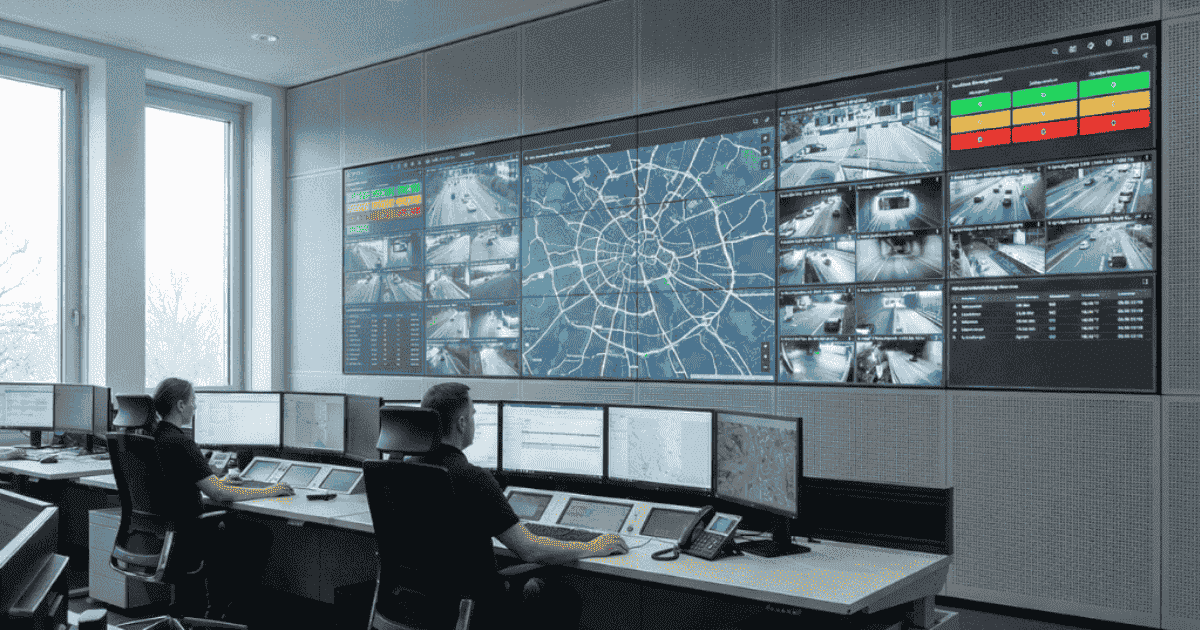
Control rooms are critical infrastructure. They run 24/7, and when they fail, it costs real money. Sometimes even lives. No wonder the choice of display technology matters so much. Display technology affects not only image quality but also availability, maintenance and energy costs. In short: the entire operation.
In this article, we go deep. We look at four main technologies: the classic LED wall, LCD video walls, projection systems and the newer technology of direct-view displays. Not to sell anything to anyone, but to make clear what really matters. That way, you make a decision you will not regret later.
LED wall vs. LCD: which one really wins?
The LED wall: robustness above all
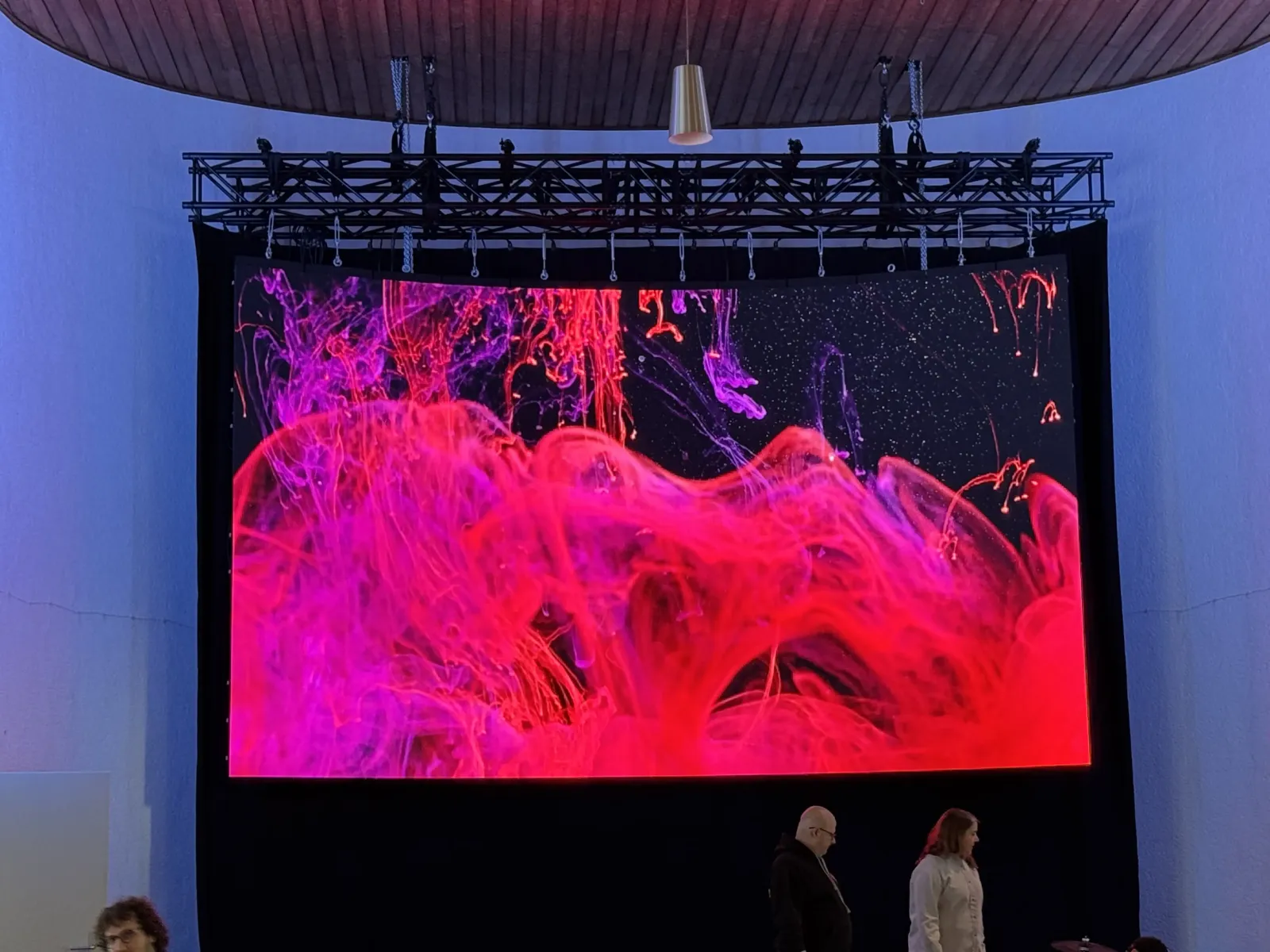
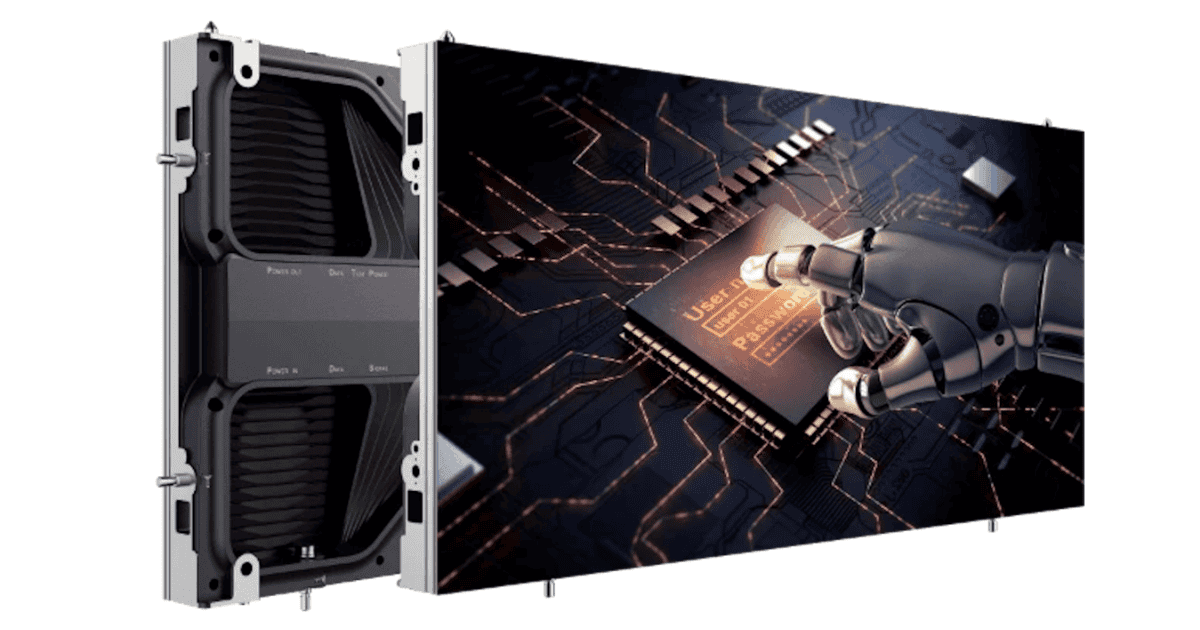
Let's be honest: the LED wall is the workhorse of the control room. It has a modular design, which means you can simply replace individual modules when something breaks. No system failure. No repairs that take hours. You swap the module, and you are done.
The brightness is impressive. At 1,000 to 3,000 cd/m², your critical data stays clearly visible even in difficult lighting conditions. Contrast is strong as well, because the black areas between the pixels are truly black. And if you choose a fine-pitch model (say P2.0 or P2.5), you get a sharp image even at closer viewing distances. That is exactly what you need for text-heavy dashboards and data visualization.
Lifetime? With proper maintenance, an LED wall lasts many years, and you replace individual modules, not the whole wall. LED technology has also proven itself many times over. Many control rooms have been running reliably on an LED wall for years. This is not hype. It is established technology.
LCD video walls: color accuracy for details
LCD walls shine in a different area. Their color accuracy is simply excellent, clearly better than with LEDs. That makes them ideal when you need to display high-resolution graphics, map details or photographic material. An LCD panel with a native 1920 × 1080 resolution is technically impressive, too.
The brightness of LCD systems is 500 to 700 cd/m², well below LED. That is not a problem in dark control rooms, but you should keep it in mind in bright rooms or rooms with a lot of ambient light. Energy consumption is significantly lower than with LEDs, which saves you electricity costs over time.
The problem? Over time, LCD panels are more prone to pixel defects. And their lifetime is well below that of LED. The bezels between the panels are now very thin (1.8 to 3.5 mm), but still visible. And if a panel fails, you often have to replace the entire panel, not just a module.
Projection and microLED: the outsiders
Projectors: affordable, but with pitfalls
At first glance, projectors seem tempting. The purchase costs are low. And the image size can be adjusted flexibly. Sounds practical, right?
But here comes the big catch: the lamps do not last long. That means you have to replace lamps regularly (and at considerable cost). Maintenance costs quickly become a major cost driver. Power consumption is brutal: 2,000 to 8,000 watts per system. And image quality depends heavily on ambient light. You need a special highly reflective screen. Dust and dirt quickly reduce image sharpness. On top of that, projectors are simply not suitable for 24/7 operation in critical environments. Their economic life cycle is short.
The verdict for control rooms? Projectors are a compromise at best. They work for conference rooms or temporary installations. For permanent critical infrastructure? Forget it.
Direct-view microLED: the future, at a price
MicroLED displays are impressive. They combine the best of both worlds: the modularity of LED with the image quality of a seamless display. Their lifetime is very long. Contrast is exceptional, because every pixel produces its own light.
The problem? The price is enormous. The technology is also not yet widely available. On the other hand, the higher initial costs pay off through extremely low operating costs and the long lifetime. If you plan for the long term, microLED systems can ultimately be more cost-effective.
System design and cost calculation
The LED wall architecture
A professional LED wall installation is well thought out. The LED modules (mostly SMD LEDs) are available in various pitch sizes. A specialized controller manages the data flow and coordinates all modules intelligently. Redundant power supplies in an N+1 configuration ensure that a single power supply failure does not bring down the whole system.
Data is connected via robust links, typically LAN, DisplayPort or specialized high-performance protocols. This is exactly where modularity is key: if a module breaks, you replace it. The system keeps running. Redundancy concepts on several levels (power supply, controllers, data connections) are standard in professional setups. Monitoring matters too. Modern systems continuously monitor all components and alert you when something gets out of hand.
Costs over the entire life cycle
What does each option really cost?
At Kampro, LED walls cost between €600 and €3,000 per square meter, plus VAT and installation. For that, you get a system that runs reliably for many years. Power consumption is 400 to 800 watts per square meter, depending on how bright you need your LED wall to be. Modern LED walls with intelligent brightness adjustment save a noticeable amount of energy. And here is the most important point: maintenance costs are minimal. There are no lamp replacements. There are no expensive wear parts. Configure your LED wall in a few minutes and request a quote.
LCD video walls sound cheaper to buy. But after a few years, you have to replace the panels. That costs money.
Projectors look inexpensive to buy, but take a look at the operating costs. A lamp replacement is expensive and comes due again regularly. Power consumption is brutal: 2,000 to 8,000 watts per system. Calculated over a year, the supposedly low initial costs are quickly eaten up. The economic lifetime is short.
MicroLED systems cost a lot up front. But maintenance is practically nonexistent. Their lifetime is very long. Power consumption is low. If you can think long term, microLED systems can be cheaper than LED over the entire life cycle.
Sizing, power supply and maintenance
Choosing the right pitch
The pixel pitch determines how close you can look before you see the individual pixels. This is not just a question of image quality; it is also a question of readability. P1.2 to P1.6 is suitable for very close viewing up to 2 meters. That is for operators who sit directly in front of the wall. P1.9 to P2.5 is the gold standard for typical control rooms. A viewing distance of 2 to 4 meters? That is perfect for P2.0 or P2.5. You get a sharp image without unnecessary costs.
P3.0 to P4.0 suits medium to long viewing distances (4 to 8 meters). P5.0 and larger is for very long distances beyond 8 meters. The choice is critical. A pitch that is too large means visible pixels and poor readability. A pitch that is too small is expensive. Well-thought-out sizing saves you costs and hassle later. Also think about lateral viewing angles. Modern control rooms often have several positions at different distances.
Planning power and cooling properly
LED walls need plenty of juice. Depending on brightness and pitch, a large wall can draw 30 to 50 amps. Your electrical system has to handle that. And here is the crucial point: having enough juice is not enough. Power quality counts. Voltage spikes can damage the electronics. UPS systems (uninterruptible power supply) are not optional; they are necessary.
Heat generation should not be underestimated either. LED walls produce considerable heat. You need good cooling: active ventilation with continuous temperature monitoring. Redundant cooling systems make sense for critical control rooms. If the cooling system fails, you have a problem.
Thorough electrical planning by qualified professionals is essential. It saves you serious problems and expensive emergency repairs later.
Maintenance and lifetime over the years
When operated correctly, high-quality LED walls last an exceptionally long time. The LED components have a very long life. But there is a degradation effect: over the years, the LEDs lose brightness. That is normal. Regular recalibration and brightness adjustment then become necessary.
Preventive maintenance is key. Dust filters need regular cleaning. Fans should be checked for wear. Connections should be checked for corrosion. Thermal measurements should be taken periodically. With good maintenance, LED systems run reliably for many years. Total operating costs drop significantly with better maintenance.
Your decision: how to find the right solution
Which technology really fits?
To put it bluntly: for most control rooms, the LED wall is the best choice. It offers high brightness and contrast, flexible sizes and resolutions, excellent reliability with redundancy on several levels, modular systems with easy replacement, and good value for money over the entire life cycle.
LCD video walls are worth considering if you need maximum color accuracy and 24/7 operation plays a smaller role. You should avoid projection systems when critical infrastructure is involved. MicroLED is the future, but not yet within every control room's budget.
An honest requirements analysis is the first step. How bright does your LED wall need to be? Which viewing distances are realistic? How important is availability? What does the budget look like? Benchmarking against other control rooms can help. References from manufacturers should be checked.
And here is an important point: get good advice from your display partner. At Kampro, we work with modern technologies and can put together concrete solutions for your requirements. Take a look at our fine-pitch displays, ideal for short viewing distances in professional control rooms. The manufacturer's long-term support capability is critical. A smart investment strategy also takes future upgrades into account. With the right LED wall and good planning, you save a lot of money and headaches later.
Sources and notes
This article summarizes the display requirements of professional control rooms. You will find more on display technologies in control rooms in our detailed guides on LED walls in control rooms: requirements, planning and operation (in German), LED video walls for control centers (in German) and 4K video walls in control rooms.
For specialized requirements, also read about fine-pitch LED displays in control rooms and LED wall technologies compared: SMD vs. COB vs. IMD (in German). For the right software support, see Display management software for control centers (in German).
Control rooms run by public authorities have special requirements. You will find details in our article on control center displays for public authorities (in German). Our LED wall buying guide walks you through the most important decision criteria. And if you need state-of-the-art fine-pitch technology for your control room, take a look at our Unilumin UMini-W, perfect for short viewing distances in professional control rooms.