
4K Video Wall in Control Rooms: Planning, Technology and Operations

LED Wall Tips
Einzelnes Blog-Bild

4K Video Wall in Control Rooms: Planning, Technology and Operations

A 4K video wall in a control room is not merely a display—it is integral to operational decision-making and the safety chain. Common mistakes arise when "4K" is understood only as a quality indicator, without considering readability from actual viewing distances, switching logic, redundancy, and operational procedures. This increases integration risks, complicates 24/7 operations, and can result in information loss or misinterpretations during system failures.

In practice, the choice often falls to an LED wall because it provides high brightness, long lifespan, and flexible formats. Simultaneously, 4K content, multiple sources, and continuous operation increase demands on pixel pitch selection, signal architecture, and spare parts and service strategies. Therefore, it is critical to define technical and organizational requirements precisely and measurably before procurement.

This article addresses key decisions: which resolution is truly necessary, how it is perceived in the space, which signal paths are robust, how redundancy is implemented, and how to reliably calculate total cost of ownership (TCO) over the asset's service life.

1) Target Vision and Requirements: What Must a Video Wall in Control Rooms Accomplish?

In brief: Requirements emerge from the operational scenario—not from display technology. Clarifying information architecture, operational procedures, and availability targets first prevents oversizing and integration risks.

The starting point is not technology, but the operational scenario. Control rooms differ by industry (energy, transportation, industrial, security) in information density, response times, and regulatory requirements. Key questions include:

  • Which information must remain visible continuously, and which appears only during events?
  • How many operators work simultaneously?
  • What content must be grasped at a glance?

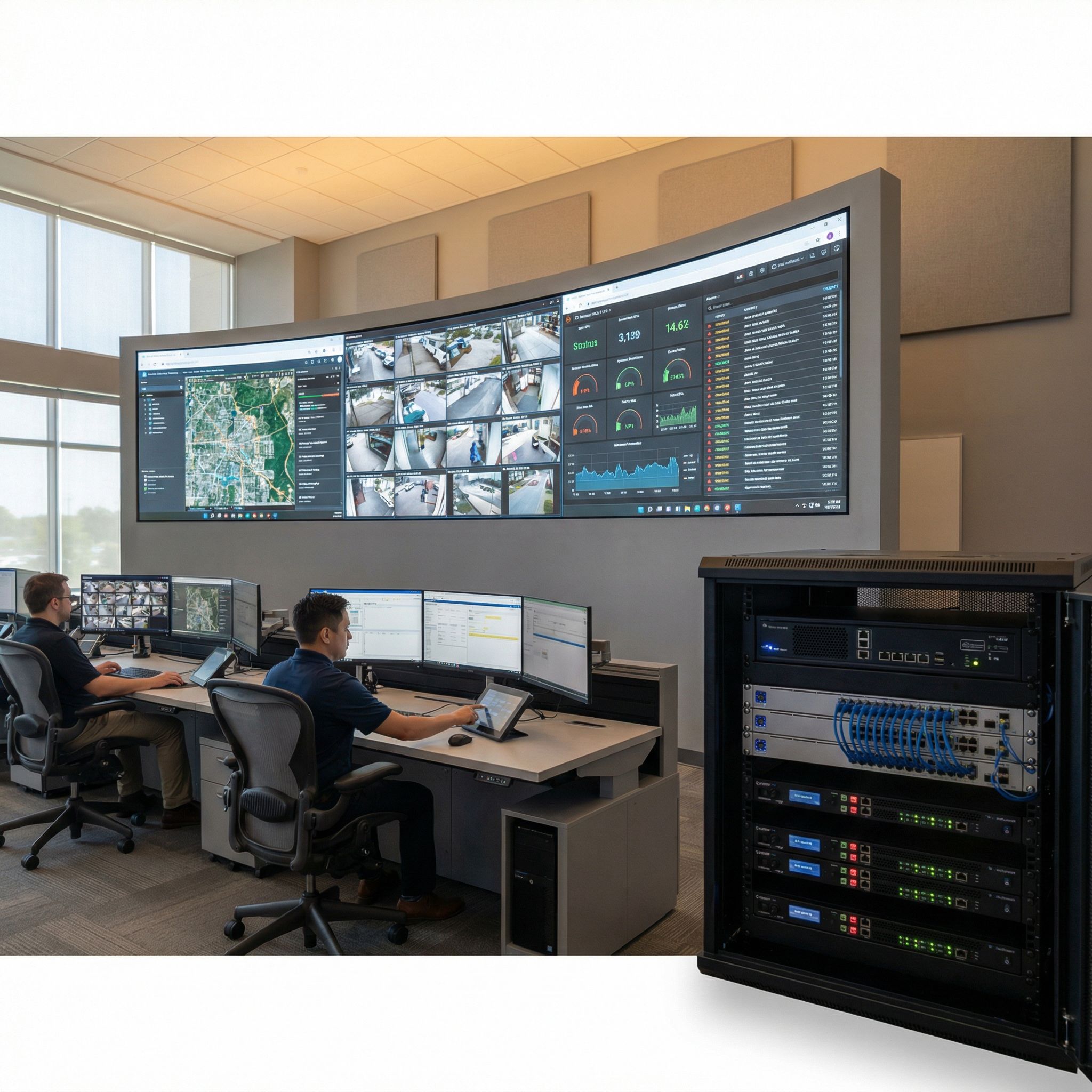
A proven approach is dividing into always-on zones (e.g., network status, KPIs, alarm overview), event zones (e.g., incident location, camera feeds, situation maps), and collaboration zones (e.g., briefing, shift handover). From this analysis, it follows whether a unified 4K surface is necessary or whether multiple logically separated areas make more sense. In practice, while a large unified display is impressive, clear information architecture reduces misinterpretations and accelerates decision-making.

For a LED wall in control rooms, availability and readability are usually more important than peak brightness or maximum color gamuts. Requirements should be formulated measurably, for example:

  • Operating mode: 24/7
  • Maximum acceptable downtime
  • Recovery time objective (RTO)
Cta V3 Bild
Artikel von

Kampro

Blog-Share-SymbolBlog-Share-SymbolBlog-Share-Symbol
Share on:
Blog Share IconBlog Share IconBlog Share IconBlog Share Icon

4K Video Wall in Control Rooms: Planning, Technology and Operations

A 4K video wall in a control room is not merely a display—it is integral to operational decision-making and the safety chain. Common mistakes arise when "4K" is understood only as a quality indicator, without considering readability from actual viewing distances, switching logic, redundancy, and operational procedures. This increases integration risks, complicates 24/7 operations, and can result in information loss or misinterpretations during system failures.

In practice, the choice often falls to an LED wall because it provides high brightness, long lifespan, and flexible formats. Simultaneously, 4K content, multiple sources, and continuous operation increase demands on pixel pitch selection, signal architecture, and spare parts and service strategies. Therefore, it is critical to define technical and organizational requirements precisely and measurably before procurement.

This article addresses key decisions: which resolution is truly necessary, how it is perceived in the space, which signal paths are robust, how redundancy is implemented, and how to reliably calculate total cost of ownership (TCO) over the asset's service life.

1) Target Vision and Requirements: What Must a Video Wall in Control Rooms Accomplish?

In brief: Requirements emerge from the operational scenario—not from display technology. Clarifying information architecture, operational procedures, and availability targets first prevents oversizing and integration risks.

The starting point is not technology, but the operational scenario. Control rooms differ by industry (energy, transportation, industrial, security) in information density, response times, and regulatory requirements. Key questions include:

  • Which information must remain visible continuously, and which appears only during events?
  • How many operators work simultaneously?
  • What content must be grasped at a glance?

A proven approach is dividing into always-on zones (e.g., network status, KPIs, alarm overview), event zones (e.g., incident location, camera feeds, situation maps), and collaboration zones (e.g., briefing, shift handover). From this analysis, it follows whether a unified 4K surface is necessary or whether multiple logically separated areas make more sense. In practice, while a large unified display is impressive, clear information architecture reduces misinterpretations and accelerates decision-making.

For a LED wall in control rooms, availability and readability are usually more important than peak brightness or maximum color gamuts. Requirements should be formulated measurably, for example:

  • Operating mode: 24/7
  • Maximum acceptable downtime
  • Recovery time objective (RTO)
Cta V3 Image
Article by

Kampro

Blog Share IconBlog Share IconBlog Share Icon