

Schools and digital technology: for a long time, that was a complicated relationship. But in 2026, one thing is clear: if you really want to modernize teaching, there is no way around high-quality display technology. The question is no longer whether, but which. This article shows why LED walls are a serious alternative to projectors and interactive whiteboards, what you need to know on the technical side and how to decide whether one is right for your school.
Why the Projector Has Had Its Day
For decades, the projector was the standard presentation medium in the classroom. But it comes with real drawbacks that you notice in everyday teaching:
• Lamp costs: Projector lamps wear out and have to be replaced regularly, which means recurring costs and downtime.
• Brightness: In daylight or with the blinds open, the image becomes faint and hard to read. Darkening the room takes time and changes the atmosphere.
• Calibration: Projectors have to be realigned regularly; keystone distortion, color deviations and blurry edges cost time.
• Image quality: Even good projectors do not reach the sharpness and contrast of modern LED displays.
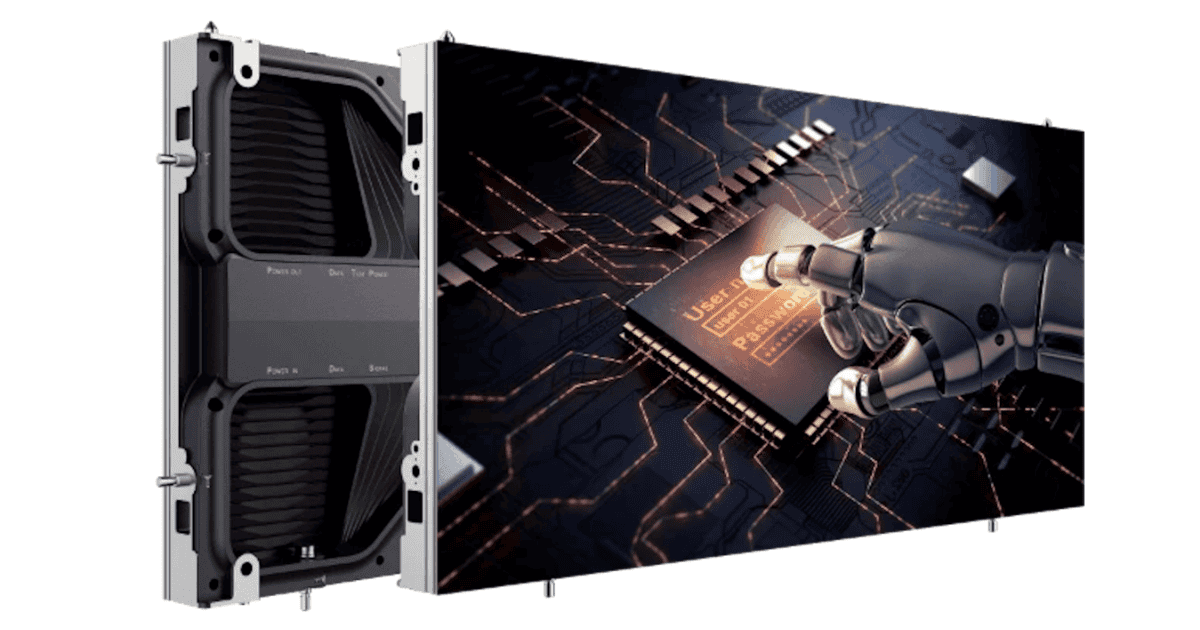
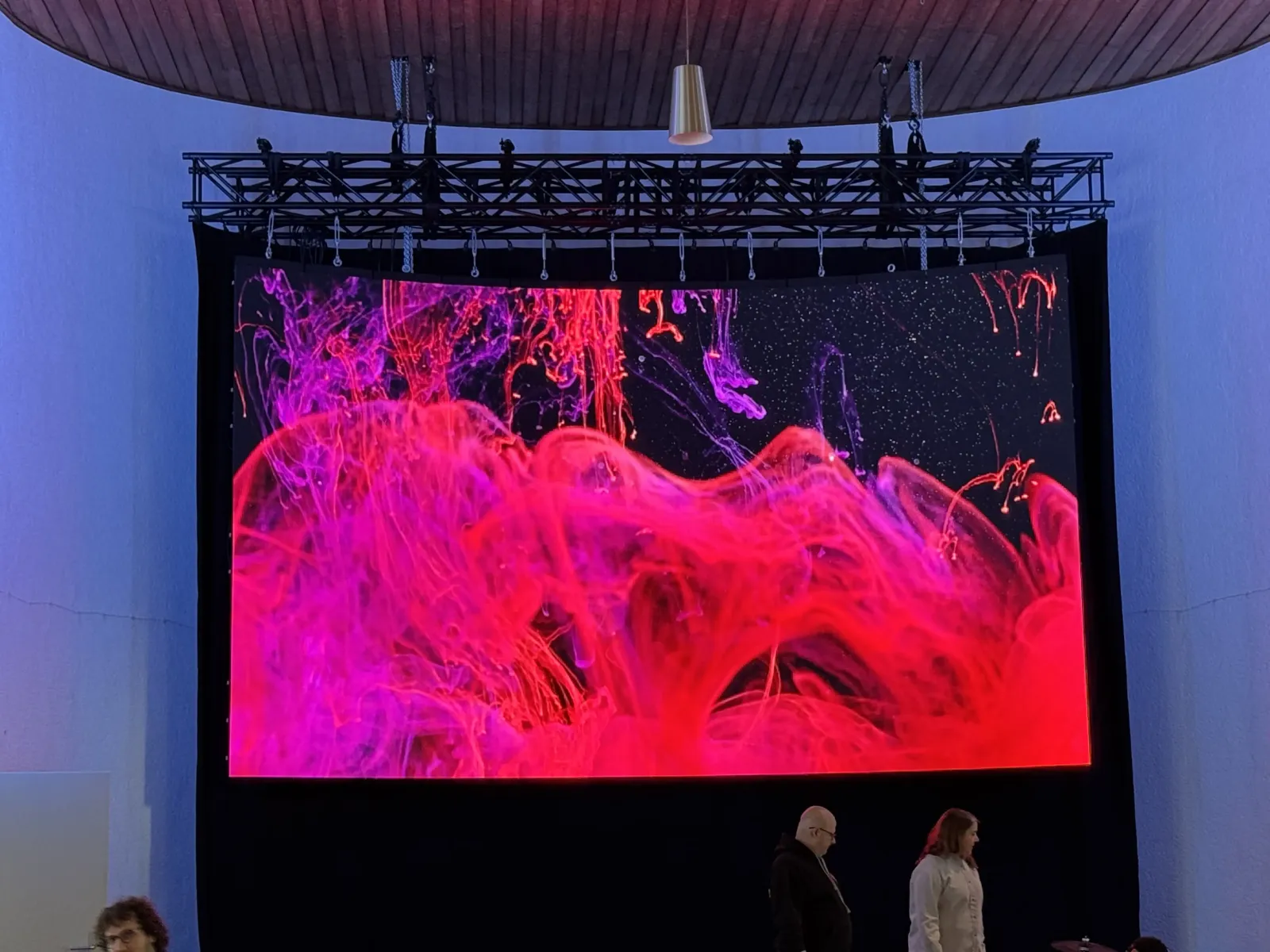
An LED wall has no lamps, no throw distance to a projection surface and no keystone distortion. The display is the image: direct, sharp and bright enough for any room.
LED Wall vs. Interactive Whiteboard
Interactive whiteboards (IWBs) are already standard in many schools. They have their strengths, but also clear limits:
Size: Most IWBs measure 65 to 86 inches (approx. 1.5 to 2 meters wide). An LED wall can be any size; 3-meter-wide displays for large classrooms or assembly halls are easily possible.
Image quality from a distance: IWBs are optimized for close viewing. In larger rooms, from a distance of 6 to 8 meters, an LED wall remains much easier to read.
Flexibility: An LED wall can display content from any source (laptop, tablet, streaming, camera) without proprietary software or a special app.
Interactivity: This is where the IWB has the edge: standard LED walls do not have a built-in touch function for direct interaction on the screen. For schools that use active touch interaction in lessons, the IWB remains the better choice, or an LED wall with an additional touch overlay.
Technical Requirements for the Classroom
Pixel pitch: In a classroom, students usually sit 2 to 6 meters from the display. As a guide (industry reference value):
• Front rows (2 to 3 m): P1.5 to P2.5 recommended
• Middle rows (3 to 5 m): P2.5 to P3.5 sufficient
• Back rows (5 to 8 m): P3.5 to P5 possible
For most standard classrooms with a depth of 8 to 12 meters, we recommend a pixel pitch of P2 to P3 as a good compromise between image quality and budget.
Brightness: Indoor LED walls for classrooms get by with 800 to 1,500 nits. More important than maximum output is even, stable brightness that can be adjusted to the room lighting. Automatic brightness control via sensor is recommended.
Size: As a rule of thumb, the display width should be at least one sixth of the room depth so that the back rows can read comfortably. In a classroom 8 meters deep, that means a width of at least approx. 1.3 meters, so at least 60 inches, ideally 75 to 86 inches or larger.
Connection: HDMI from the teacher's laptop or tablet is enough for simple setups. More convenient: Wi-Fi casting (Miracast, AirPlay) for wireless screen sharing straight from the teacher's device.
Typical Classroom Use Cases
Presentations and explanations: Slides, explainer videos, maps, charts: everyday use. The LED wall delivers sharp, high-contrast images even in daylight, without the room having to be darkened.
Group work and collaborative learning: Students can present their results directly on the display from their own laptop or tablet. This encourages active presenting and discussion.
Video lessons and webinars: Digital content, from YouTube explainer videos to live connections with other classes, looks much more impressive and supports learning far better on a large LED wall than on a small monitor.
School events and assembly halls: Outside lessons (at information evenings, school events or presentations), an LED wall in the assembly hall or common room can be used for every format.
Caretakers and administration: Internal communication such as timetables, announcements and substitution schedules can be shown digitally on a display in the entrance area or hallway.
Costs and Funding Options
An LED wall for schools costs from €1,300 per square meter depending on pixel pitch, excl. controller, accessories and installation, plus VAT. That sounds like a lot, but compared with a projector it pays off over time: no lamp costs, no recurring effort, and if something fails, you replace individual modules, not the whole wall. Configure your LED wall in a few minutes and request a quote
Good news: many German federal states and the successor programs to the DigitalPakt Schule fund the purchase of digital devices for schools. Check the current funding guidelines in your state; LED displays are often recognized as eligible hardware.
When Does an LED Wall Pay Off, and When Doesn't It?
An LED wall makes sense if:
• the classroom is large (from approx. 60 m² or more than 8 meters deep)
• the display needs to be clearly visible in daylight
• the room is used for several purposes (lessons, events, assembly hall)
• you want to minimize maintenance effort in the long run
• funding is available
An interactive whiteboard or large display is enough if:
• the room is small (under 50 m²) and direct touch interaction matters
• the budget is tight
• the school already has a well-functioning IWB system
For a personal assessment: Buying an LED Wall: The Comprehensive Guide for B2B Decision-Makers →
Unilumin UTV SC Series: All-in-One Solution for Teaching and Meetings →
Conclusion: The Right Technology for Modern Education
An LED wall in the classroom is not a luxury. It is a tool that makes teaching more visible, more flexible and more future-proof. The technical hurdles are manageable, the operating costs low and the visual advantage over old projectors immediately noticeable. If you invest in the right display technology now, you equip your school for years to come: no annual lamp replacements, no darkening routines, a clear image in any light.
Sources and Notes
Pixel pitch recommendations: Industry reference values based on manufacturer specifications (Unilumin, Infiled). The final choice depends on the specific room geometry and seating layout.
Price information: Purchase prices per square meter, excl. controller, accessories and installation, plus VAT. Your quote depends on size, pixel pitch and mounting.
Funding programs: Funding conditions change regularly. Ask the responsible school authority or your state's ministry of education about the programs and requirements currently available.
Note on comparison values: Lamp replacement intervals and costs depend on the projector model; see the manufacturer's specifications.